Balcony gardening in small spaces: a practical guide for Indian flats
A small balcony in a flat can hold more plants than you might think. How to map its sun, keep the weight sensible, stop water dripping on the flat below, use walls and stands, pick plants for the light you have, and get through the monsoon and the summer heat.
Lasaki Ceramics team11 min read
Product details checked 28 October 2026

In this guide
- Step 1: Map your sun before you buy anything
- Step 2: Work out what your balcony is carrying
- Step 3: Plan where the water goes
- Step 4: Use the walls and the height
- Step 5: Choose plants for the light you have
- Wind and monsoon
- A watering routine you can keep
- Quick checklist
- For nurseries, shops, cafés and designers
A balcony in a flat is rarely generous: often a metre deep, shaded by the floor above, windy on a high storey or baked by the afternoon sun. It can still hold a surprising number of plants if you plan four things before buying a single pot: sun, weight, water and wind.
Step 1: Map your sun before you buy anything
Light decides what will grow, so spend one clear day watching your balcony.
- Check every hour or two, from early morning (around 7 am) to late afternoon, and note where direct sun falls: the floor, the railing, a corner or the back wall.
- Add up the hours roughly for each spot. They needn't come in one stretch: two hours in the morning and four in the afternoon make six.
- Repeat when the season changes. The sun is lower in winter, so a south-facing balcony shaded by the one above can get more direct sun in December than in May.
Six or more hours counts as full sun, about 3 to 6 as part sun, and less as mostly shade (definitions vary a little).
Oregon State University Extension's rule of thumb is that south-facing windows get the most intense sun, east and west fall in the middle, and north-facing ones are low light. North India broadly follows this; further south, and in summer everywhere, a north-facing balcony can also catch direct sun, so trust your sun map over the compass.
Step 2: Work out what your balcony is carrying
University of Wisconsin–Extension warns that large containers get heavy when wet, a problem when several sit on a balcony. For scale, here is what three Lasaki ceramic pots weigh according to our product data, before any mix or plant goes in (all product sizes and weights in this guide are approximate, from that data):
| Pot | Size | Weight |
|---|---|---|
| Orin 4.5d antique | about 10 cm high, 11.5 cm across | about 440 g |
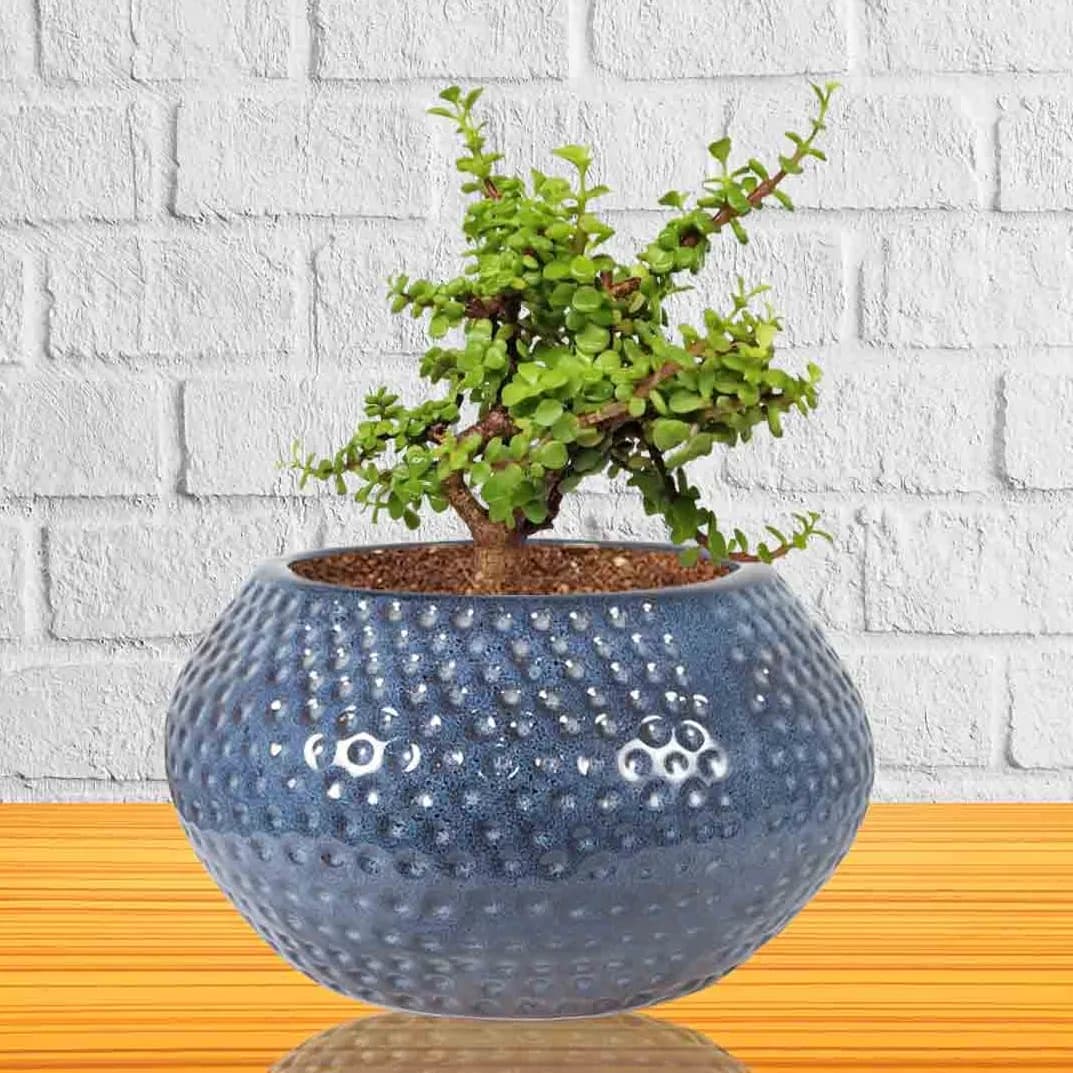
| Avani 6d colorful dots | about 13 cm high, 15.5 cm across | about 950 g |
| Orb rustic | about 20 cm high, 25 cm across | about 2.45 kg |
Mix, water and a plant add much more. Not every product has a weight in our data; ask us if you need one.
- Heavy pots near the wall. The Royal Horticultural Society (RHS) in the UK notes that balconies built out from a building often have strict weight limits, and advises keeping heavy containers near load-bearing walls: against the back wall, not along the outer edge.
- A soilless mix, not garden soil. Wisconsin Extension describes soilless mixes as quite light and soil-based ones as much heavier; cocopeat (coir) is a common base. The catch: soilless mixes dry out faster and may need up to twice as much water.
- Ask before you go big. For raised beds, large planters or a long row of big pots, check with your housing society, builder or a structural engineer first; nobody can judge a balcony's limits by eye.
Step 3: Plan where the water goes
Drainage holes
A pot you plant straight into needs drainage holes; without them, proper watering is difficult. Our product data doesn't record whether a pot has a hole, so check the product photos or ask us.
A pot without a hole still works as a cover pot: leave the plant in its plastic nursery pot (the kind with holes), set that inside, and tip out any water that collects.
Plates, neighbours and drains
- Use a plate or tray wherever water would drip onto the balcony below or mark the floor, and tip it out once the pot stops dripping. Never leave a pot standing in water.
- Keep the floor drain clear by sweeping up soil after repotting.
- Raise big floor pots slightly, on a couple of bricks or small pot feet, so the holes drain and the roots don't sit waterlogged.
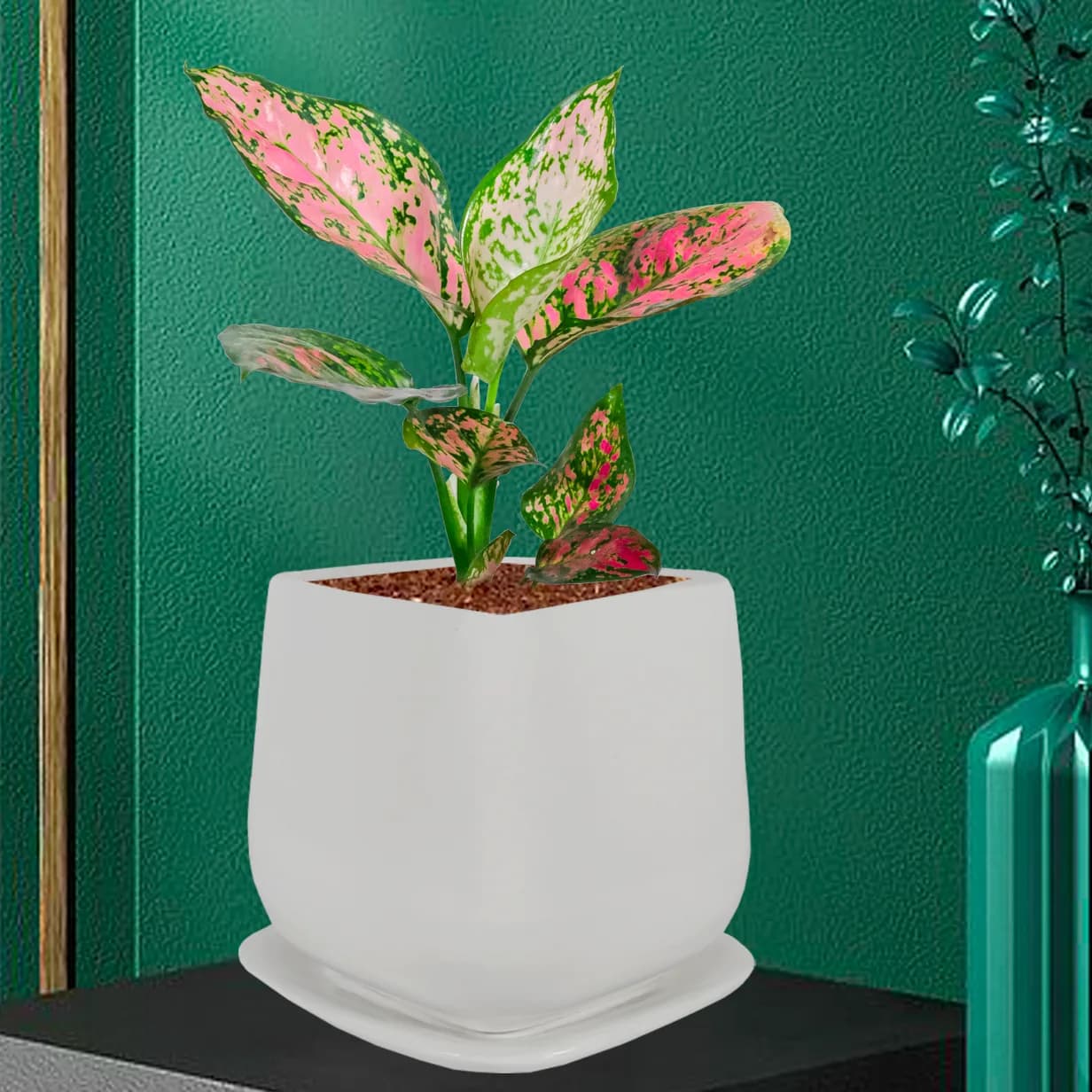
Lasaki's plates for planters and trays suit small and medium pots: round plates up to about 16 cm across, a rectangular plate of about 20 × 14 cm, and the long Slato tray, about 23.5 × 11.5 cm, handy for a row of small pots on a shelf or an inside windowsill. For a bigger pot, measure its base and ask us. For small pots you can skip the matching: Pots with Plate come with their own, such as Pearl medium white with plate, about 15 × 15 cm and 13.5 cm high.


Step 4: Use the walls and the height
Wall-hanging pots
The Cloy wall-hanging pots come in three sizes:
- Cloy small wall hanging: about 15.5 cm high, 5 × 6 cm across
- Cloy medium wall hanging: about 20 cm high, 6 × 8.5 cm across
- Cloy big wall hanging: about 26 cm high, 7 × 10 cm across
Slim pots hold little mix and dry out fast, so choose small, forgiving plants and check them daily in summer: a money plant cutting or a small spider plant on a shaded wall, portulaca on a sunny one. Our data doesn't record how the Cloy pots attach to a wall or whether they are meant for open-air use, so check the photos or ask us before hanging them in direct sun and rain. Use a fixing that takes a wet pot's weight, check with your landlord or society before you drill, and pour slowly so water doesn't run down the wall.
Tiered stands
A stand turns one floor tile into two or three levels. Lasaki's wood products include two:
- Noah two tier black stand: black, about 38 cm high and 25 cm across
- a three-tier hanging stand: about 59 cm high and about 36.5 × 36.5 cm in length and width; check the photos to see how pots sit or hang on it, and ask us what pot size each tier takes

- Heaviest pots at the bottom keep the stand steady. Neither stand has a load rating in our data, so ask us before loading either one with heavy pots.
- Light-lovers on top, since upper tiers can shade the ones below, and a plate under every pot.
- Keep wooden stands under cover, out of direct rain. Our data doesn't record the type of wood, any finish, or whether these stands are meant for outdoor use, so for an open terrace, ask us first.
Railings and hanging baskets
Keep pots on the inside of the railing. A pot on a ledge or hung outside can be knocked or blown off, and from an upper floor that endangers people below; check your society's rules too. Hanging baskets dry out fastest (the RHS says they sometimes need water daily in hot, sunny weather), and a wet one is much heavier than a dry one, so use a strong hook.
Step 5: Choose plants for the light you have
A few plants widely grown in Indian homes, by sun level:
| Sun | Plant | Good to know |
|---|---|---|
| Full sun (6+ hours) | Tulsi (holy basil) | Dislikes waterlogged soil |
| Full sun | Portulaca | Very heat- and drought-tolerant; rots in soggy soil |
| Full sun | Bougainvillea | Takes heat and drought; long thorns |
| Full sun | Chillies (mirchi) | Evenly moist soil; Wisconsin Extension suggests a pot holding at least 19 litres (5 gallons) of mix |
| Part sun (3 to 6 hours) | Sadabahar (periwinkle) | Also takes full sun; flowers through the heat |
| Part sun | Gudhal (hibiscus) | Also takes full sun; moist, well-drained soil; shelter from wind |
| Part sun | Mint (pudina) | Dislikes dry soil; spreads fast, so give it its own pot |
| Mostly shade (under 3 hours) | Money plant (pothos) | Prefers bright indirect light, survives low light |
| Mostly shade | Spider plant | Medium light, no direct sun; good in a hanging pot |
| Mostly shade | Snake plant (sansevieria) | Takes very low light; overwatering rots the roots |
| Mostly shade | Boston fern | Bright indirect light, high humidity; never let it dry out |
These are starting points: varieties differ, and a west-facing Delhi balcony in May is far harsher than a breezy Bengaluru one. In a heatwave, move potted plants into shade or use shade cloth.
Most Lasaki pots are tabletop and windowsill sizes; for a chilli or a bougainvillea, pick one of the larger ceramic pots and compare its cm dimensions with the root ball. If it will stand in the open, check the photos or ask us first.
Wind and monsoon
Wind
- Low and wide in the windiest spot. The RHS warns that tall, narrow containers blow over easily. By shape, Merger multi, about 17.5 cm high and 33 cm across, suits a windy spot better than Aura multi, about 54 cm high and 28 cm across. Our data doesn't record a pot's finish or whether it is meant for open-air use, so before placing any pot in direct rain and sun, check the photos or ask us.
- Filter the wind rather than block it. The RHS prefers slatted or mesh screens, as solid walls can cause turbulence; a bamboo chik works the same way.
- Bring things in before a storm. India's National Disaster Management Authority (NDMA) advises keeping small, loose things safely indoors if strong winds could blow them away. When a storm or cyclone warning is issued, take down hanging pots and follow official advice.
Rain and humidity
- Feel the soil. As the RHS points out, an overhang from the floor above can keep rain off the pots at the back while those in front are soaked.
- Empty the plates after rain. Mosquitoes that spread dengue breed in standing water; the US Centers for Disease Control and Prevention (CDC) advises emptying and scrubbing plant saucers once a week.
- Give plants room. Grey mould spreads fast in humid weather, so don't crowd pots, and remove dead leaves and flowers promptly. Water the soil, not the leaves.
A watering routine you can keep
Container plants need water all year round. Check first, then water properly.
- Check. Water when the mix feels dry about 2.5 cm (an inch) down; a small pot that feels very light when lifted needs water too.
- Water thoroughly until a little runs out, then empty the plate. Frequent light sprinkles encourage shallow roots and leave salts near the surface.
- Water in the morning where you can, before the worst heat, and mulch the surface with dry leaves to slow evaporation.
| Season | What usually happens | What to do |
|---|---|---|
| Summer, and the loo (hot, dry wind) in north India | Small, hanging and west-facing pots dry fastest; Wisconsin Extension says containers can need water up to three times a day in hot, dry, windy weather | Check every morning, and small pots again in the evening |
| Monsoon (roughly June to September in most of India; Tamil Nadu gets more of its rain from October to December) | Pots under an overhang may get no rain | Feel each pot before watering; tip plates after rain |
| Winter, especially in north India | Pots dry out more slowly | Water less often, but don't stop |
Quick checklist
- Sun mapped before buying plants, and again next season.
- Heavy pots against the back wall; nothing outside the railing.
- Low, wide pots where it's windy.
- Thorough watering when the top 2.5 cm is dry, not a daily splash.
- Plates tipped after rain and scrubbed weekly.
For nurseries, shops, cafés and designers
Balcony gardeners need slim pots, matching plates and stands. Lasaki's catalogue has ceramic pots, plates and trays and wood products such as the stands above. Retailers, nurseries, cafés and interior designers can request trade access, and for anything the product data doesn't answer, such as drainage holes, weights or how a stand is put together, ask us.
Frequently asked questions
How many hours of sun does a balcony need for flowering plants?
Most flowering plants do best in full sun, which gardeners usually define as six or more hours of direct sun a day, and the hours don't have to come in one stretch. If a spot gets less than about three hours, flowering plants tend to struggle, so choose foliage plants such as snake plant, money plant or spider plant for it.
How do I know how much weight my balcony can take?
You can't tell by looking. Before adding raised beds, large planters or many big pots, ask your housing society, the builder or a structural engineer. In the meantime, keep the heaviest pots against the back wall rather than along the outer edge, and use a soilless potting mix, which weighs much less than garden soil.
How often should I water balcony plants in summer?
There's no fixed schedule, so check every day. Push a finger in, and if the top 2.5 cm or so is dry, water until a little drains out of the bottom. In hot, dry, windy weather, small and hanging pots can need water more than once a day, so look at them again in the evening.
Is it safe to hang pots on the outside of the railing?
No, it's best not to. Anything outside the railing or resting on a parapet can fall if it is bumped or caught by a gust, and a pot dropping from a high floor can seriously hurt someone below. Keep pots within the balcony, follow your society's rules, and bring hanging pots in when a storm or cyclone is forecast.
Can Lasaki's wooden stands stay on an open balcony in the monsoon?
We can't confirm that: the wood type, finish and outdoor suitability aren't in our product data. Keep them where rain can't reach them, and ask us before planning a stand for an open terrace.
Can my nursery or shop order these pots, plates and stands?
Lasaki supplies businesses such as retailers, nurseries, cafés and interior designers. Request trade access on the website to see trade details, or contact us if you would like help putting together pots, plates and stands for balcony customers.
Products in this guide

Stock Lasaki pots, vases and décor in your store
Retailers, nurseries, cafés and interior designers order from the full Lasaki catalogue with a trade account.
Share this guide
Share on WhatsApp