How to choose the right ceramic pot size for your plant
Too small and the soil dries out fast; too big and it stays wet. How to measure a root ball, move up one pot size at a time, match depth to the plant, handle drainage and saucers, and read Lasaki sizes such as 4.5D and 5 inch in centimetres.
Lasaki Ceramics team11 min read
Product details checked 28 October 2026
In this guide
- The short answer: root ball plus 2.5 to 5 cm
- How to measure a pot and a root ball
- Repotting: one size up at a time
- Why a much bigger pot does more harm than good
- Height vs width: matching the pot to the plant
- Drainage holes and saucers
- How to read Lasaki pot sizes
- A quick checklist before you choose
- Choosing pots for a shop, nursery, café or project
A plant can have good light and careful watering and still struggle because of its pot. If the pot is too small, the soil can dry out almost as soon as you water it in summer. If it's far too big, the extra soil can stay wet for days, especially in the monsoon. Choosing the right size mostly comes down to measuring carefully and moving up in small steps.
This guide covers the rule of thumb most horticulture sources agree on, how to repot without overdoing it, when height matters as much as width, and how to read Lasaki pot sizes such as 4.5D, 5D, 6D and "5 inch" in centimetres.
The short answer: root ball plus 2.5 to 5 cm
Measure the root ball (the clump of roots and the soil they hold), then choose a pot about 2.5 to 5 cm wider than it. If the plant is already in a pot, the root ball is roughly as wide as that pot, so look for something 2.5 to 5 cm wider than the pot it's in now.
That works out to only about 1.25 to 2.5 cm of fresh soil on each side. It sounds like very little, and that's deliberate. Gardening guides from US universities (published through their extension services) commonly suggest going up by about one to two inches (2.5 to 5 cm) in diameter at a time.
How to measure a pot and a root ball
- Width (diameter): measure across the top, through the centre. This is the figure to compare first.
- Height: stand the pot on a flat surface and measure from the surface to the rim.
- Root ball: water the plant about an hour before you start, ease it out of its pot, and measure the width and depth of the block of roots and soil.
- Space inside: pot walls take up room, so the space inside is a little smaller than the outside measurement. If a plastic nursery pot has to slip inside a ceramic pot, measure the nursery pot's rim and leave a margin.
A pot that narrows towards the top can look lovely, but getting the root ball out at the next repotting will be harder.
Repotting: one size up at a time
Signs your plant has outgrown its pot
- Roots are coming out of the drainage hole, or are circling round the inside of the pot.
- The soil dries out much faster than it used to, even in cooler weather.
- Growth has slowed although light and care haven't changed.
- The plant has become top-heavy and tips over easily.
When to repot
The US university guides mentioned above advise repotting when active growth starts, which in the US means spring. Growing seasons vary across India and from plant to plant, so a better cue is the plant putting out new leaves.
How to repot, step by step
- Water the plant in its old pot about an hour before you start.
- Pick a new pot 2.5 to 5 cm wider than the root ball, with a way for water to drain out.
- Put a layer of fresh potting mix in the bottom, enough that the top of the root ball will sit about 2.5 cm (an inch) below the rim. That gap leaves room for watering.
- Ease the plant out and gently loosen any roots that are circling the outside of the root ball.
- Fill around the sides with potting mix, firm it lightly, and water until water runs out of the bottom.
What "one size up" looks like in centimetres
The Pi pot white series is a handy example because its widths go up in small steps (product data):
| Pot | Height | Width (diameter) |
|---|---|---|
| Pi pot 5 white | about 7.5 cm | about 7.5 cm |
| Pi pot 4 white | about 9 cm | about 9 cm |
| Pi pot 3 white | about 10 cm | about 11 cm |
| Pi pot 2 white | about 14 cm | about 12 cm |
| Pi pot 1 white | about 15.5 cm | about 15.5 cm |
A plant whose root ball is about 9 cm across would move to something about 11.5 to 14 cm wide, which in this series means Pi pot 2 (about 12 cm), not the biggest pot. Pi pot 3 (about 11 cm) is only about 2 cm wider than the root ball, a little under the rule. The numbers in these names go down as the pots get bigger: Pi pot 1 is the largest of the numbered sizes.


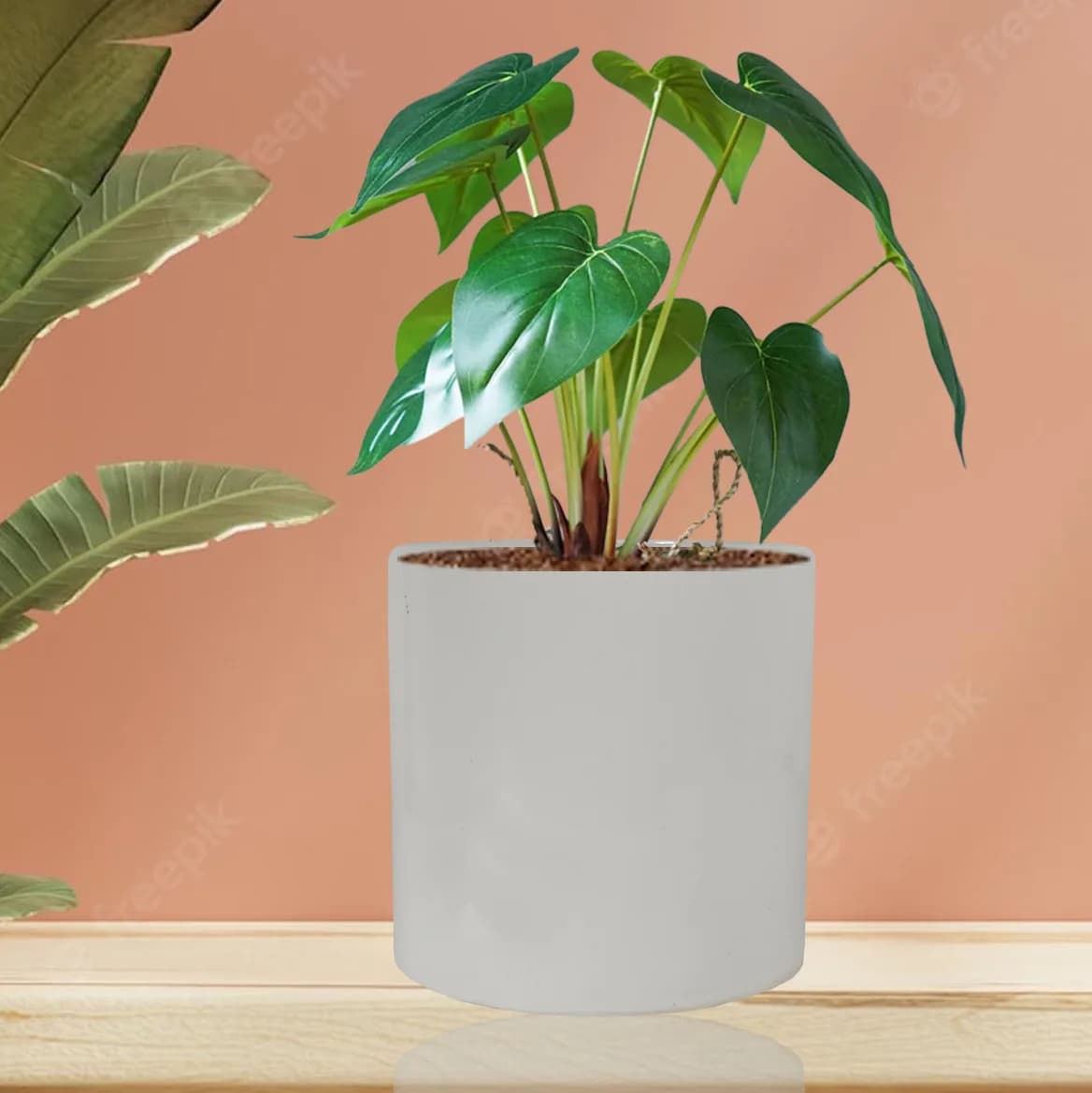
Why a much bigger pot does more harm than good
It's tempting to move a small plant straight into a big pot so you never have to repot again. The problem is the soil the roots haven't reached yet. It holds water the plant can't use, stays wet for a long time, and roots sitting in wet soil can rot. This matters even more in the monsoon, when humid air means soil dries more slowly.
The opposite mistake is leaving a plant too long in a tiny pot. Small containers dry out quickly and tip over more easily, especially when the plant is tall. In hot, dry, windy weather, plants in containers can need water more than once a day.
Height vs width: matching the pot to the plant
Width is the first number to check, but depth and stability matter too. These are starting points, not fixed rules:
| Plant | What to look for | Why |
|---|---|---|
| Succulents and cacti (jade plant, aloe vera) | A pot only a little bigger than the plant; for a group, a container just big enough to hold them all | Extra soil stays wet and can cause rot |
| Snake plant (sansevieria) | A wider base for stability | It's tall and narrow, and overwatering can cause root rot |
| Money plant (pothos) | A tabletop or hanging pot, sized by the 2.5 to 5 cm rule | Let the potting mix dry between waterings; overwatering can cause root rot |
| Tulsi and other sun-loving herbs | A larger, deeper pot as the plant grows | Small pots dry out fast on a sunny balcony |
| Bonsai | Low, wide bonsai pots | Shallow by design; bonsai care is a subject of its own |
Money plant, snake plant, aloe vera and jade plant are all listed as toxic to cats and dogs, so keep them where pets can't chew them.
Tulsi is a close relative of culinary basil, and a University of Wisconsin container-gardening guide lists basil for large 8 to 12 inch (about 20 to 30 cm) pots. A small tabletop pot can hold a young plant, but plan to move it up as it grows.
Bonsai pots show how different "height vs width" can be. Camry big white, for example, is about 30 cm across but only about 10 cm high (product data). The full range is under bonsai pots, and we cover them in a separate guide.

Drainage holes and saucers
Whatever size you choose, the water needs somewhere to go. The same university guides are clear that a pot you plant into needs drainage holes so extra water can escape. A layer of pebbles at the bottom doesn't help: the water still collects in the pot.
If you love a pot without a hole, use it as a cover pot. Keep the plant in a plastic nursery pot that has holes, stand that inside the ceramic pot, and pour out any water that collects after watering.
Under a pot with a hole, a plate or saucer keeps floors and shelves clean. Don't leave the pot standing in water: tip the saucer out once the pot has finished draining. In the monsoon, check the saucers of balcony plants after rain as well. Standing water in saucers can also breed mosquitoes, and India's national guidelines on controlling the dengue mosquito ask for saucer water to be removed every week.
For Lasaki pots, the product data doesn't say whether a pot has a drainage hole, so check the product photos or ask us before you plant directly into one. Some designs are listed with a plate (see pots with plate). Separate round plates for planters run from 3 inch to 6 inch, about 9.5 to 16 cm across, and there are rectangular and square plates as well (product data). Even here the label is only a rough guide: round plates labelled 4 inch range from about 10 to 13 cm across. Nothing in the data says which plate suits which pot, so measure the base of your pot and choose a plate that is a little wider.

How to read Lasaki pot sizes
Many Lasaki pot names carry a size label, but the label is a name, not a measurement. Most product pages list the measurements in centimetres, and those are the figures to trust; if a page has none, ask us. Here's how some labels compare (product data):
| Label | Pot | Height | Width (diameter) |
|---|---|---|---|
| 4.5D | Orin 4.5d white | about 10 cm | about 11.5 cm |
| 4.5D | Avani 4.5d white | about 9 cm | about 11.5 cm |
| 5D | Orin 5d white | about 11.5 cm | about 12.5 cm |
| 5D | Avani 5d white | about 11 cm | about 13 cm |
| 6D | Orin 6d white | about 13.5 cm | about 15.5 cm |
| 6D | Avani 6d white | about 13 cm | about 15.5 cm |
| 4 inch | Sara 4 inch mint | about 10.5 cm | about 12 cm |
| 5 inch | Sara 5 inch mint | about 13 cm | about 14 cm |
What the table tells you:
- D sizes (Orin, Avani): the number usually sits close to the width in inches (1 inch is 2.54 cm). Orin 4.5D is about 11.5 cm across, and 4.5 inches is about 11.4 cm. Two ranges with the same label still aren't identical: Avani 5D is a little wider and lower than Orin 5D.
- Inch sizes (Sara): Sara 4 inch is about 12 cm across and about 10.5 cm high, so on this design the inch figure sits closer to the height than to the width.
- Small, Medium and Big compare sizes within one design only. Peblo big white is about 11 cm across, while Bowl small white is about 16 cm across and 8 cm high (product data). One design's Big can be narrower than another's Small.
- Numbers in names aren't always measurements: in the Pi pot series a bigger number means a smaller pot.
- For these round pots the data gives one diameter. It doesn't say whether that is taken at the rim or at the widest point, and it doesn't give wall thickness. If the fit is tight, ask us.
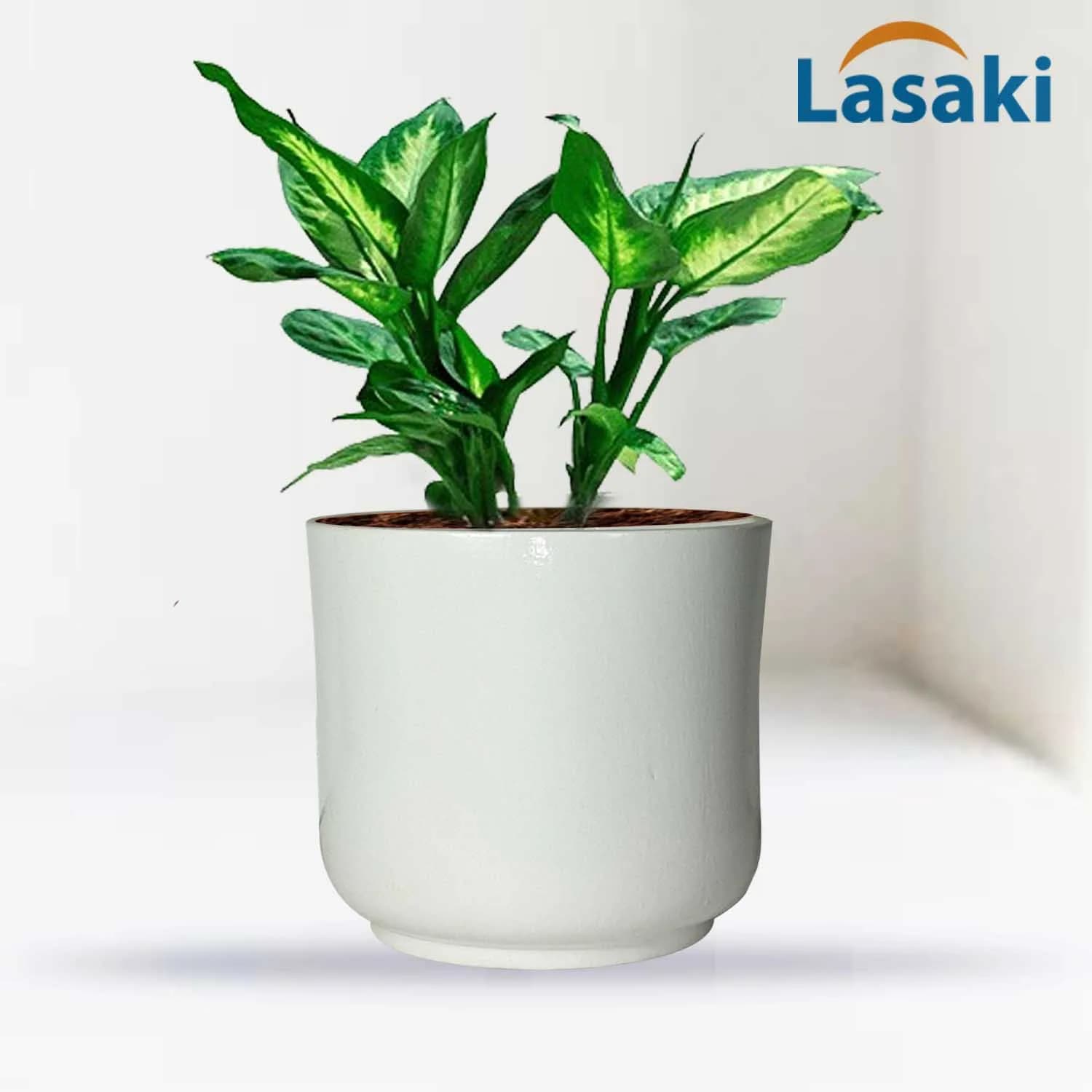
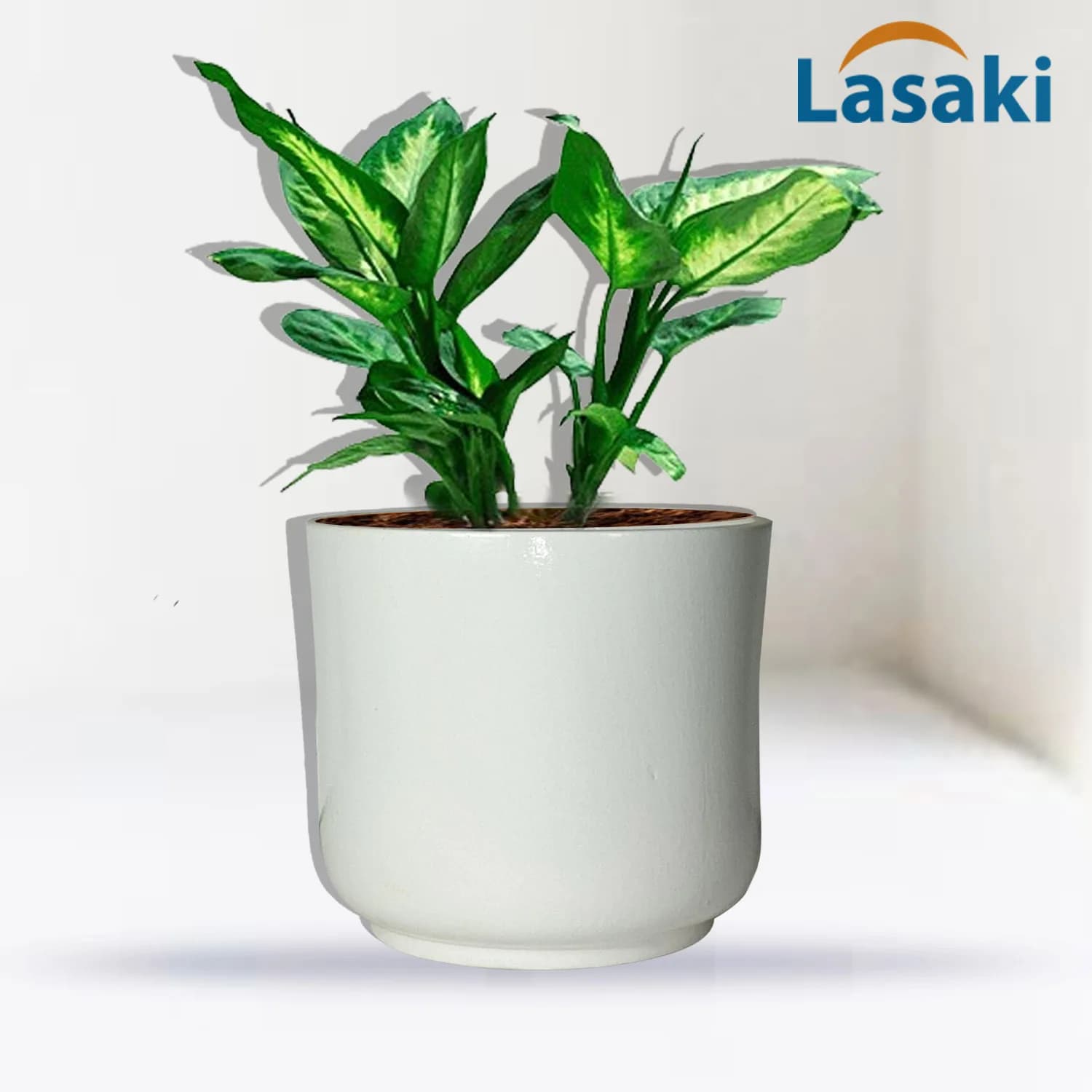
Most of these D and inch pots are tabletop sizes, roughly 11.5 to 15.5 cm across (product data). By the 2.5 to 5 cm rule, that matches root balls of roughly 6.5 to 13 cm. For a bigger plant, browse the full ceramic pots range by its cm figures.
A quick checklist before you choose
- Measure the root ball, or the current pot, across the top.
- Add 2.5 to 5 cm to get the width of the new pot.
- Check the depth: is the plant shallow-rooted, tall and top-heavy, or trailing?
- Read the cm figures on the product page, not just the label.
- Plan the drainage: a pot with a hole and a plate, or a nursery pot inside a cover pot.
- Measure the base of the pot before choosing a plate.
Choosing pots for a shop, nursery, café or project
The same rules apply when you're choosing pots in quantity, with one extra step. Measure the nursery pots your plants arrive in (width across the top and height), then match them to the cm figures of the ceramic pots. A short list of "nursery pot size → ceramic pot" saves a lot of guesswork at the counter.
Retailers, nurseries, cafés and interior designers can request trade access to order from the Lasaki catalogue. For anything the product data doesn't answer, such as drainage holes or which plate suits which pot, ask us.
Frequently asked questions
Can I put a small plant straight into a big pot so I don't have to repot later?
It's better not to. Roots can only use the water in the soil they have grown into, so a big pot leaves a lot of soil that stays wet, and in humid weather that raises the risk of root rot. Moving up about 2.5 to 5 cm in width at a time is the safer habit.
What does 4.5D mean on a Lasaki pot?
It's the size name used in ranges such as Orin and Avani. The number is usually close to the pot's width in inches: Orin 4.5d white (size 4.5D) is about 11.5 cm across in the product data. Pots with the same label can differ between designs, and occasionally even between versions of one design, so always check the cm figures on the product page.
Do Lasaki pots have drainage holes?
Our product data doesn't record whether a pot has a drainage hole, so please check the product photos or ask us about the specific pot before planting straight into it. A pot without a hole can still be used as a cover pot, with the plant kept in a plastic nursery pot inside it.
How do I know it's time to repot?
Look for roots coming out of the bottom or circling inside the pot, soil that dries out much faster than before, slower growth with the same care, or a plant that has become top-heavy and keeps tipping over. Easing the plant out of its pot and looking at the roots is the surest check.
We sell plants in nursery pots. How do we choose ceramic pots for them?
Measure the top width and height of each nursery pot size you use, then pick ceramic pots whose cm figures leave a little room around the nursery pot. Most Lasaki product pages list the measurements in cm (height and diameter for round pots). Retailers and nurseries can request trade access, and you can send us your nursery pot measurements and ask which pots match.
Products in this guide


Guides in this series
Stock Lasaki pots, vases and décor in your store
Retailers, nurseries, cafés and interior designers order from the full Lasaki catalogue with a trade account.
Share this guide
Share on WhatsApp