How to care for succulents and cacti in small pots on a desk or windowsill
The two commonest problems with desk succulents are too much water and too little light. This guide covers how much light succulents and cacti need, a gritty soil mix, watering only when the soil is dry, monsoon rot, and how to choose a small pot, with cm sizes for Lasaki's smallest pots.
Lasaki Ceramics team11 min read
Product details checked 28 October 2026
In this guide
- Succulents, cacti and why small pots suit them
- Easy succulents for desks and sills
- Light: the real desk problem
- Soil: gritty and quick to drain
- Watering: soak, drain, then wait
- The monsoon: when succulents rot
- Too much water or too little?
- Choosing a small pot for a succulent
- Planting a small group together
- A quick checklist
- For cafés, offices, shops and nurseries
A small succulent on a desk or windowsill is often someone's first plant, usually sold with the promise that it is impossible to kill. A few weeks later it turns soft and yellow, or grows long and pale and leans towards the window. Often, neglect is not the cause. The two commonest problems with desk succulents are too much water and too little light.
The fixes are simple, and a small pot actually helps. This guide covers light, soil, watering and monsoon care in Indian homes and offices, then choosing a small pot. Lasaki makes ceramic pots and does not sell plants, so the plant advice is general and based on published horticulture guidance.
Succulents, cacti and why small pots suit them
Succulents store water in thick, fleshy leaves or stems. Cacti are one group of succulents. What sets them apart is the areole, a small cushion on the stem from which spines, flowers and branches grow. So every cactus is a succulent, but aloe vera, jade plant and haworthia are succulents that are not cacti.
Iowa State University Extension, a US university gardening service, explains that succulents do well in small or shallow containers because the small amount of soil dries out more quickly. That leaves less water around the roots, and less chance of rot.
Easy succulents for desks and sills
Light needs and size vary within each group, so treat this as a starting point:
| Plant | Light | Good to know |
|---|---|---|
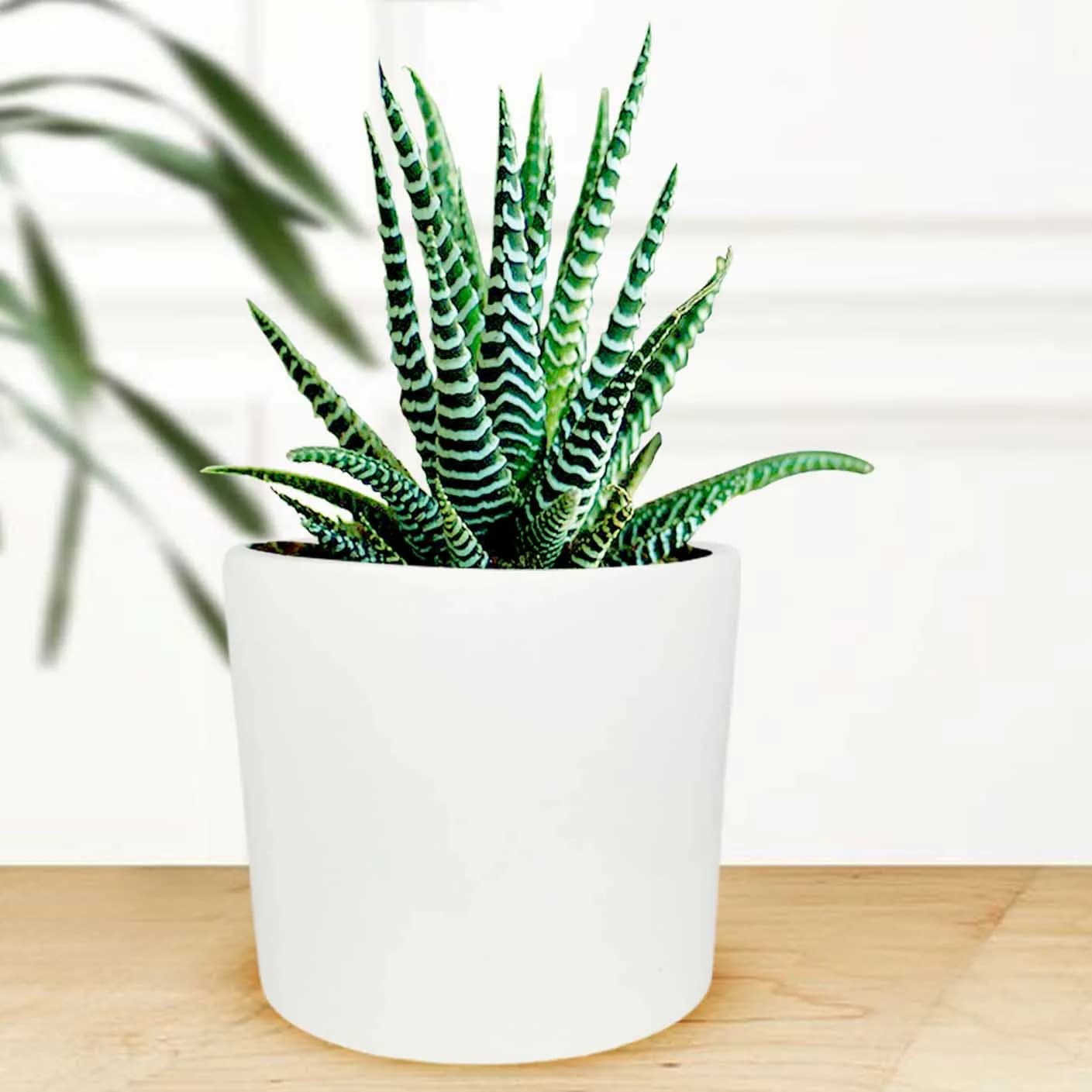
| Haworthia | Bright light, but somewhat tolerant of lower light | Stays small; NC State Extension suggests it as a desk plant |
| Echeveria (rosette succulents) | Bright light | Water the soil, not the centre of the rosette, where trapped water can cause rot |
| Aloe vera (gwarpatha, ghee kunwar) | Full sun to part shade | Let the soil dry completely between waterings |
| Jade plant (Crassula ovata) | Sunny, with some afternoon shade | Grows into a small tree over the years; a small pot suits a young plant |
| Small cacti | Bright light; most enjoy full sun | Hold spiny plants with folded newspaper when you repot |
| Snake plant (sansevieria) | Tolerates low light | A succulent too; tall and narrow, so it needs a wider, steadier pot than a mini pot |
Light: the real desk problem
Most succulents and cacti need bright light: Illinois Extension suggests at least six to eight hours a day. The brightest spot in a room is right by a window. A desk in the middle of a room or office, lit mainly by ceiling lights, is usually too dim in the long run; the plant shows it by growing lanky and pale and leaning towards the window.
- Move it to the window. A windowsill, or a desk pushed up against a bright window, makes the biggest difference.
- Turn the pot every week or so, so the plant grows evenly.
- Add a light. Extension guides suggest an LED or fluorescent grow light when daylight is short.
Too much sun can also do harm, especially in an Indian summer: Iowa State suggests part sun for indoor succulents moved outdoors, as intense light can damage leaves and stems. Move plants into strong sun gradually, and give them afternoon shade in the hottest months.
Soil: gritty and quick to drain
Ordinary potting soil holds too much water for succulents. You want a mix that drains fast and never stays soggy.
- Easiest: a ready-made cactus and succulent mix from a nursery.
- Mix your own: Illinois Extension suggests one part organic material, such as potting soil or coir (cocopeat), to two parts gritty material, such as perlite, pumice or coarse sand (sold as sharp sand in the UK), not fine sand. The UK's Royal Horticultural Society (RHS) recommends a mix with less grit. The ratios differ, but both aim for fast drainage.
- Finish the top with a thin layer of grit or fine gravel, as the RHS suggests; it looks tidy too.
Watering: soak, drain, then wait
Overwatering is the most common way people kill succulents. A small splash every day keeps the soil from ever drying out. Water like this instead:
- Check first. Push a finger or a wooden skewer into the mix. In a small pot, it should feel dry almost to the bottom.
- Water thoroughly, until water runs out of the drainage hole.
- Let it drain, then empty the saucer or tray. Never leave the pot standing in water.
- Wait until the mix is completely dry again.
Lifting the pot before and after watering also helps: a small pot of dry mix feels noticeably lighter.
How often? Some US extension guides suggest every two to three weeks to start with, but drying time depends on light, heat, humidity, soil and pot. A small pot on a sunny sill may dry within days in May, yet stay damp far longer in the monsoon. Check the soil, not the calendar:
| Season | What changes | What to do |
|---|---|---|
| Summer | Heat and strong sun dry small pots fast | Check more often; water deeply when dry, but less often if a plant shows no new growth in the hottest weeks; shade from harsh afternoon sun |
| Monsoon | Humid air, cloudy days and rain slow drying | Water much less; see the monsoon section below |
| Winter | Growth usually slows, especially in cooler north Indian winters | Water less often and let the mix stay dry for longer |
The monsoon: when succulents rot
The monsoon is the hardest season for succulents. Humid air and grey days slow drying, and rain blowing onto a balcony or open sill can keep a pot wet for days, which leads to root rot.
- Keep pots out of the rain, under a roof or overhang, or indoors by a bright window.
- Water much less, and only after checking the mix.
- Empty saucers and trays after every rain and every watering.
- Keep water out of rosettes such as echeveria.
Too much water or too little?
| What you see | Likely cause | What to do |
|---|---|---|
| Leaves or stems turning yellow and soft; the plant collapses | Soil too wet | Stop watering, let it dry out completely, check the roots |
| Jade plant dropping leaves | Can be overwatering | Check the mix and the roots before watering again |
| Lower leaves wrinkled or drying up | Too dry | Water thoroughly if the mix is dry, then go back to soak, drain and wait. If the mix is still damp, check the roots instead |
| Long, pale stems leaning one way | Too little light | Move closer to a window and turn the pot regularly |
Choosing a small pot for a succulent
What matters most
- A drainage hole. Extension guides are clear that a pot you plant into needs one. If you love a pot without a hole, use it as a cover pot: keep the plant in a holed plastic pot inside it, and tip out any water that collects.
- Only a little bigger than the plant. The RHS warns that the extra soil in an oversized pot stays wet, and Iowa State says to choose a container just big enough to fit the roots. When repotting, choose a new pot about 2.5 to 5 cm (1 to 2 inches) wider than the old one.
- Shallow is fine. Many succulents grow well in low pots. A tall cactus or a top-heavy jade plant needs a pot wide and heavy enough not to tip.
- Something underneath. On a desk or a wooden sill, a plate or tray protects the surface.
- An open mouth. A pot that narrows at the top makes it hard to get a spiny cactus out later.
Unglazed clay and terracotta are porous, so the mix in them dries faster; in plastic it tends to stay damp for longer.
Small Lasaki pots, in centimetres
Some of the smallest pots in the Lasaki ceramic pots range. Sizes below are from our product listings:
| Pot | Measurements | Worth knowing |
|---|---|---|
| Mini pot antique | about 8 × 8 × 8 cm (L × W × H) | Also in white, mint and many other colours |
| Pi pot 5 white | about 7.5 cm high, 7.5 cm across | The smallest of the numbered Pi pots |
| Pi pot 4 white | about 9 cm high, 9 cm across | Also in a multicolour version, Pi pot 4 painting |
| Softsquare 3 inch white with tray | about 7.5 × 7.5 × 7.5 cm | With a tray |
| Core with plate white | about 8 cm high, 9.5 cm across | With a plate |
| Buddha 3.5 inch antique | about 9 cm high, 8.5 cm across | A Buddha design |
| Square menon small white | about 9 × 9 cm, 6 cm high | A low square pot |
| Heartstone white | about 10.5 × 10.5 cm, 5 cm high | The lowest pot in this list |
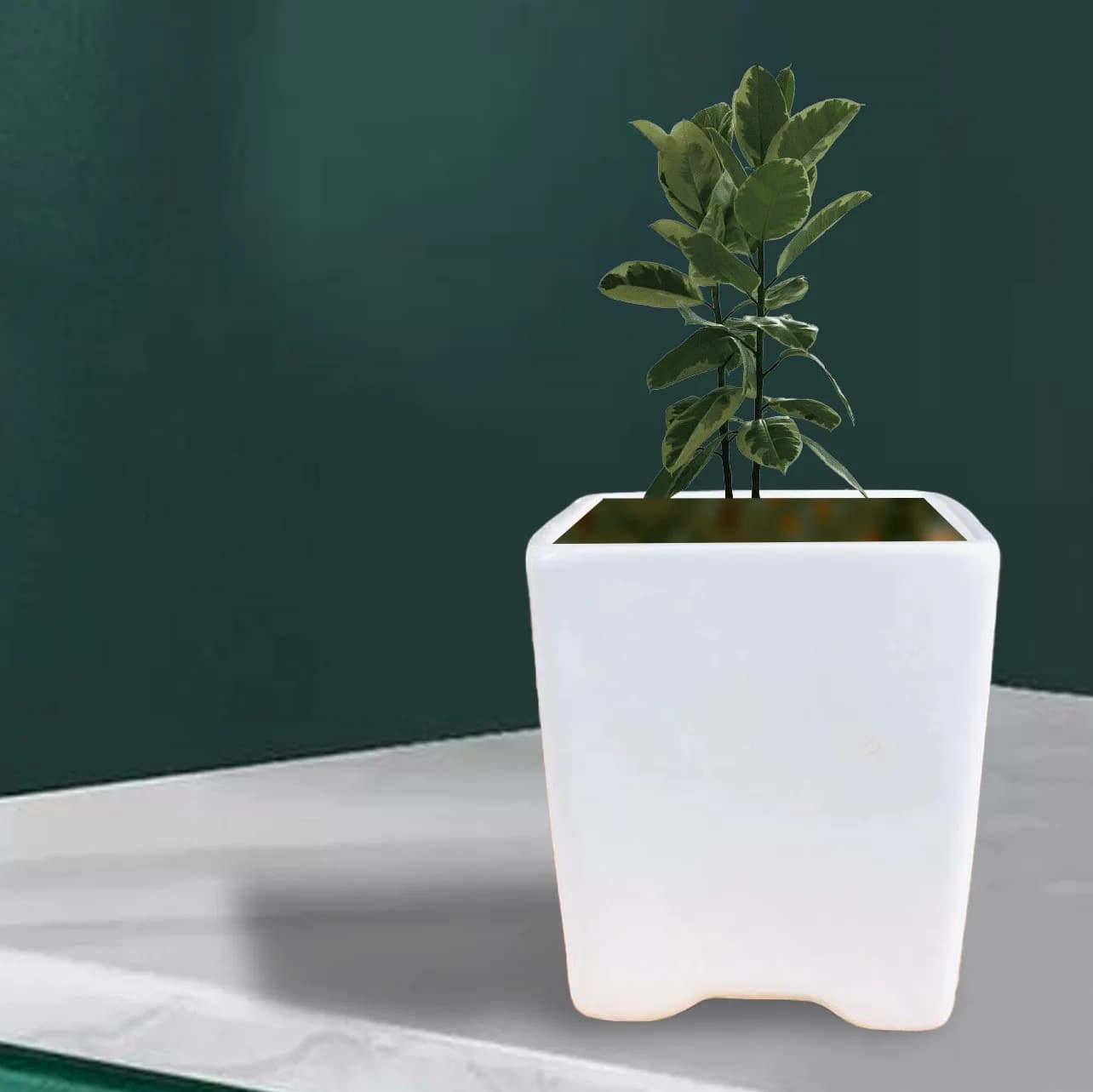
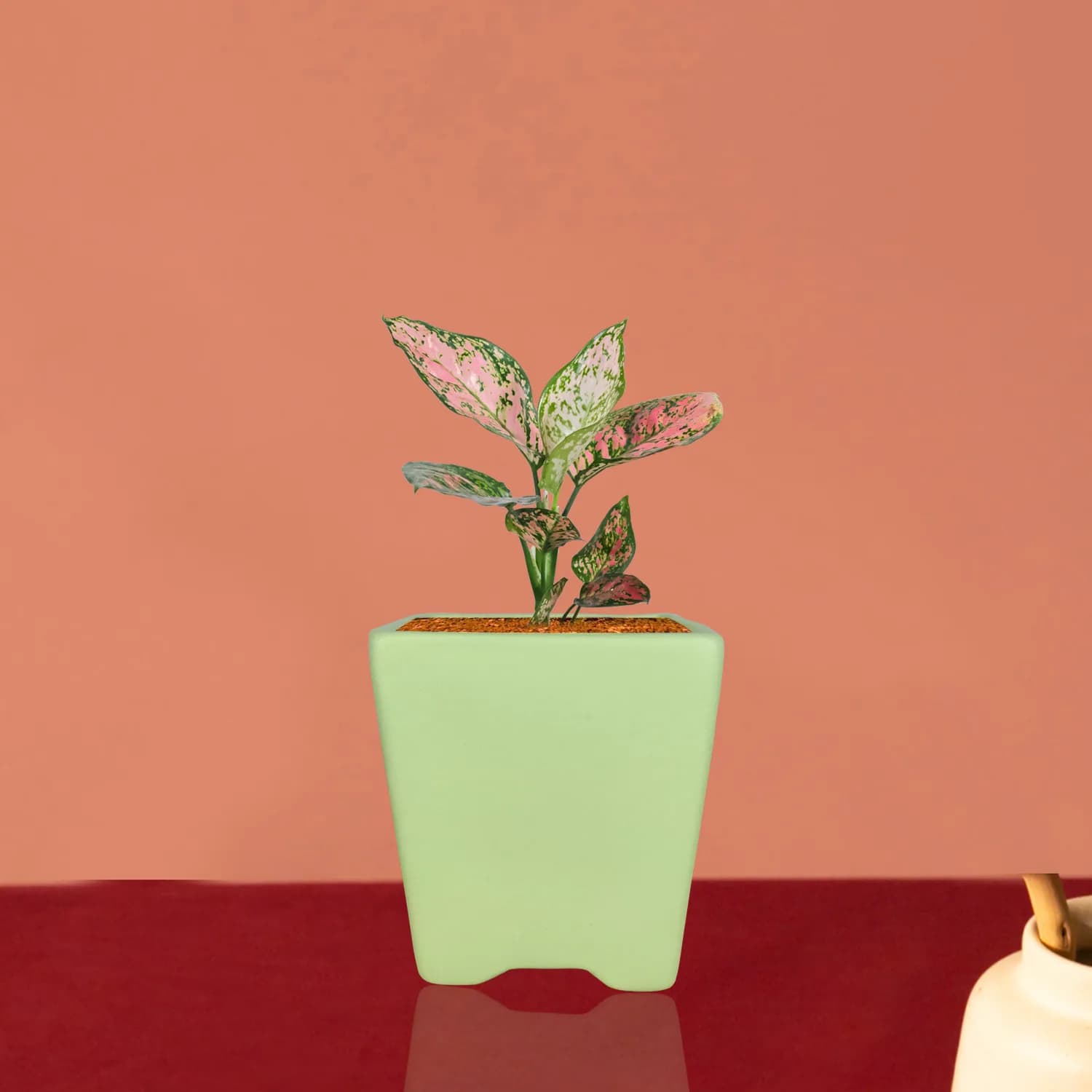
What do these numbers mean for a plant? With the 2.5 to 5 cm rule, an 8 cm pot suits a root ball or nursery pot of roughly 3 to 5.5 cm: a young succulent or a small cactus. The inside is a little smaller than the outside, because of the walls.


Our listings do not say whether a pot has a drainage hole, so check the product photos or ask us before planting straight into one. Without a hole, the cover-pot method still works.
Pots that come with a plate or tray
A pot with its own plate or tray saves you hunting for one that fits. The Softsquare and Core pots above come with one, and there are more under pots with plate. For other pots, small plates such as Plate circular 3 inch white R3, about 9.5 cm across and 1.5 cm high, are under plates for planters. Our listings do not match plates to pots, so measure your pot's base and pick a plate a little wider.


Planting a small group together
Two or three small succulents in one low pot make a neat desk piece. The RHS advice for groups is a container just large enough to hold them all. Group plants with the same light and water needs, such as small cacti. Low pots such as Heartstone white (about 10.5 × 10.5 cm, 5 cm high) and Square menon small white (about 9 × 9 cm, 6 cm high) have room for two or three very small plants, as do the smallest low bonsai pots. Plant a group directly only if the pot has a drainage hole: check the product photos or ask us.


A quick checklist
- A bright window spot, turning the pot weekly.
- A gritty, fast-draining mix.
- A drainage hole (or a cover pot), in a pot just bigger than the plant.
- Deep watering only when the mix is dry; an empty saucer.
- Much less water in the monsoon and winter.
For cafés, offices, shops and nurseries
Small succulents suit café tables, reception desks and gift counters where space is tight, as long as the spot is bright. If you are buying pots in quantity, measure the nursery pots your plants come in against the cm figures above, so they slip inside the ceramic pots, which then act as cover pots, or plant straight in where a pot has a drainage hole.
Retailers, nurseries, cafés and interior designers can request trade access to order from the Lasaki catalogue. For anything our listings do not answer, such as drainage holes or which plate fits a pot, ask us.
Frequently asked questions
Can I keep a succulent on my office desk?
Only if the desk gets plenty of daylight. Most succulents need bright light, and a desk lit mainly by ceiling lights is usually too dim for them in the long run. Keep the pot at or right beside a window, or choose haworthia, which copes with somewhat lower light. An LED grow light also helps. If the plant grows long and pale and leans one way, it is asking for more light.
How often should I water a succulent in a small pot?
There is no fixed schedule. Water only when the mix is dry almost to the bottom of the pot, then water until it drains out and empty the saucer. On a sunny sill in summer that point can come quickly; in the monsoon or a cool winter it can take much longer. A finger, a wooden skewer or the weight of the pot tells you more than the calendar does.
Do succulents need a pot with a drainage hole?
A pot you plant into should have one, so extra water can escape. If you love a pot without one, grow the plant in a holed nursery pot and use the ceramic pot as an outer cover, emptying it after watering. Lasaki's product listings do not record whether a pot has a drainage hole, so check the product photos or ask us about the pot you have in mind.
Why does my succulent turn soft and yellow in the monsoon?
Usually because the soil is staying wet. Humid air, cloudy days and rain all slow drying, and roots sitting in wet soil can rot. Move the pot out of the rain, stop watering until the mix is completely dry and empty any saucer. If the stem base is soft and dark, the roots may have started to rot: take the plant out and check them, as described in the monsoon section of this guide.
What size pot does a small cactus need?
A pot only a little bigger than the plant. The usual rule of thumb is 2.5 to 5 cm (1 to 2 inches) wider than its current pot or root ball, so an 8 cm pot such as the Lasaki Mini pot (about 8 × 8 × 8 cm) suits a root ball of roughly 3 to 5.5 cm. A tall cactus that tips over easily needs a wider, heavier pot. Our listings do not say whether a pot has a drainage hole, so check the photos or ask us; without one, keep the cactus in a holed nursery pot inside it and use it as a cover pot.
Does Lasaki sell succulents or potting mix?
No. Lasaki makes ceramic pots, planter plates and trays, and other décor pieces, and does not sell plants, soil or fertiliser. A local nursery is the place for plants and a cactus and succulent mix. Nurseries, retailers, cafés and interior designers who need small pots in quantity can request trade access to the Lasaki catalogue.
Products in this guide
Stock Lasaki pots, vases and décor in your store
Retailers, nurseries, cafés and interior designers order from the full Lasaki catalogue with a trade account.
Share this guide
Share on WhatsApp