
Moroccan-pattern tiles: design ideas for kitchens, bathrooms, walls and steps
Where patterned tiles look best, from kitchen backsplashes and bathroom walls to step risers and tabletops. Layouts that stretch a few tiles further, colour pairings for Indian homes, how to choose grout colour, and how to read tile sizes in centimetres.
Lasaki Ceramics team12 min read
Product details checked 28 October 2026
In this guide
A row of patterned tiles behind the kitchen counter, a line of them up the steps to the terrace, a single framed tile on a bookshelf: Moroccan-style patterns work at almost any scale. They are also easy to overdo. Pattern on every wall, a grout colour that fights the design, or a tile used somewhere it was never meant to go can spoil the whole effect.
This guide covers where patterned tiles work best, how to lay them out, which colours and grout to pair them with, and how to read tile sizes. It is about design: fixing tiles is a job for a professional installer, and we say where you need one.
What "Moroccan pattern" usually means
The look comes from zellige (also spelled zillij), the traditional Moroccan tile mosaic. Workshops in Fez make it by cutting small pieces from glazed square tiles and setting them into stars, hexagons, chevrons and interlacing bands. These designs belong to the wider family of Islamic geometric pattern, which builds complex designs by repeating and interlacing simple shapes such as circles and squares.
Many tiles sold as "Moroccan" today are not mosaics but square tiles with a pattern on the face, inspired by that tradition. When the tiles are laid side by side, the pattern runs on from one to the next, and where four corners meet, new shapes often appear: a star, a flower, a diamond.
India has its own patterned-tile tradition too. Athangudi tiles, named after a village in the Chettinad region of Tamil Nadu, are made by hand from cement and coloured oxides, in geometric and floral designs.
Where to use patterned tiles
These ideas apply to patterned tiles in general. Before you plan a wall or floor around a particular tile, ours included, check with the supplier that it is meant for that kind of surface.
Kitchen backsplash
The strip of wall between the counter and the wall cabinets is the classic spot. Three ways to use it:
- Full strip. Pattern from end to end. Works best when the cabinets and counter are plain.
- Panel behind the hob or gas stove. A patterned panel framed by plain tiles draws the eye to one spot and needs far fewer patterned tiles.
- A single band. One row of patterned tiles running through an otherwise plain backsplash.
Indian cooking means tadka splatter, steam and oil. Check that the tile you like suits the wall behind the stove and beside the sink, and pick a grout colour that will not show every stain.
Bathrooms
- The wall behind the washbasin and mirror makes a natural feature wall.
- A band of pattern at eye level, with plain tiles above and below.
- A "rug" on the floor: a patterned panel in the middle, framed by plain tiles.
Shower walls, bathroom floors and anywhere water collects are wet areas. Whether a tile suits them depends on how much water it absorbs, how slippery it gets when wet, and how it is fixed and grouted. A professional installer should make that call for any tile, ours included.
Feature walls, entrances and puja corners
Good places to start:
- The entrance or foyer, where a patterned panel is the first thing guests see.
- Behind the puja shelf, as a backdrop that frames the mandir.
- A balcony wall behind a group of pots. A wall that gets monsoon rain is an outdoor surface, so check with your installer first.
A block of patterned tiles framed by plain ones, or by a strip of wood, often looks more deliberate than tiling the whole wall.
Steps
Steps are a lovely place for pattern, as long as it goes on the right part:
- Risers, the upright faces you see as you walk up, are where patterned tiles belong. Use a different pattern on each step for a patchwork look, or the same one for a calm, repeating line. On outdoor steps that get monsoon rain, treat the risers like any outdoor wall and have the tile checked first.
- Treads, the part you step on, need a tile rated for floors that is not slippery, especially on outdoor steps in the monsoon. Ask the supplier for slip-resistance test data and let your installer choose.
Tabletops and small décor
Not every project needs a wall:
- A tiled tabletop. A carpenter can set tiles into a coffee table or side table. Sixteen 10 cm tiles, four by four, make a top of about 40 × 40 cm, not counting the joints. Lay the tiles out with their joints before the frame is made, and ask the carpenter how to protect the surface from spills and hot cups.
- One tile on a shelf. A single patterned tile on a bookshelf or desk adds colour with no fixing at all.
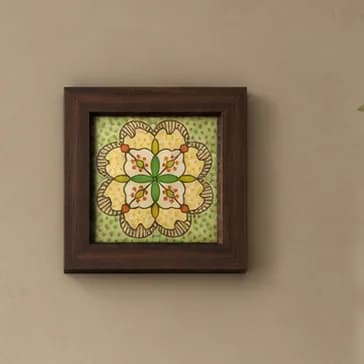
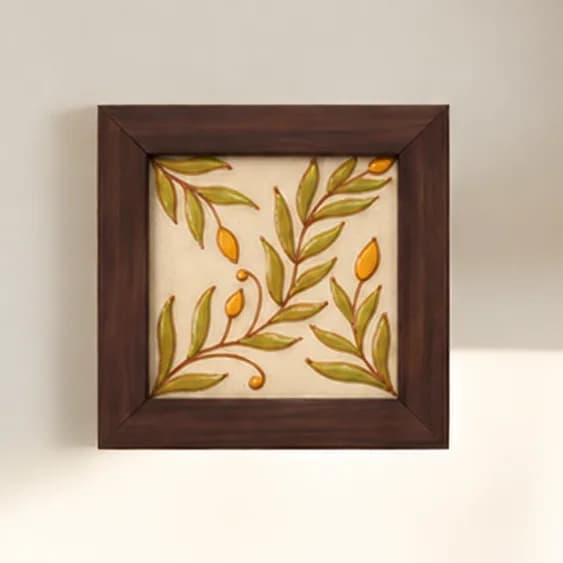
- Framed tiles. A framed tile can sit on a shelf, a desk or a side table as it is, and makes an easy gift.
Ways to lay the tiles
The same tile can look completely different depending on how it is laid.
| Layout | How it looks | Good for | Tip |
|---|---|---|---|
| Straight grid | Neat rows; the pattern repeats evenly | Backsplashes, small panels | The easiest layout to plan and fit |
| Quarter turns | Each tile turned 90° from its neighbour, so new shapes form where corners meet | Feature walls, floors | Try it on the floor first: some patterns change completely when turned |
| Diagonal | Tiles set at 45°, so the grid reads as diamonds | Entrances, floors | More tiles are cut at the edges, so order more spares |
| Checkerboard | Patterned and plain tiles alternate | Covering more area with fewer patterned tiles | Choose a plain tile in the pattern's background colour |
| Border or "rug" | A patterned centre framed by plain tiles | Bathroom and foyer floors, tabletops | Size the panel in whole tiles so no patterned tile is cut |
| Patchwork | Several patterns mixed together | Step risers, cafés, accent walls | Keep one shared colour so the mix looks planned |
Before anything is fixed, lay the tiles out dry in the planned arrangement. Step back, take a photo and look at it from across the room. Tiles can vary a little in shade from box to box, and tiles made by hand often vary in size and thickness too, so mix tiles from several boxes as you lay them out instead of emptying one box at a time.
Pairing colours
A Moroccan pattern is usually several colours on one background. Four principles help:
- Let one surface carry the pattern. If the backsplash is patterned, keep the counter, cabinets and other walls plain.
- Repeat one colour from the tile. Pick a colour from the pattern and use it two or three more times in the room: a towel, a cushion, a pot, a vase.
- Match the plain tiles to the background. Plain tiles or paint in the tile's background colour make the pattern look at home.
- Think about the light. In a small or dim room, a pattern on a pale background feels lighter than a dark, dense one.
Pairings that suit Indian homes:
- Blue and white with white walls and wooden furniture: crisp and cool, good for kitchens and bathrooms.
- Greens with wood, brass and plants: warm and easy to live with, good for balconies and living rooms.
- Orange and ochre with terracotta, cane and off-white: earthy, good for entrances and puja corners.
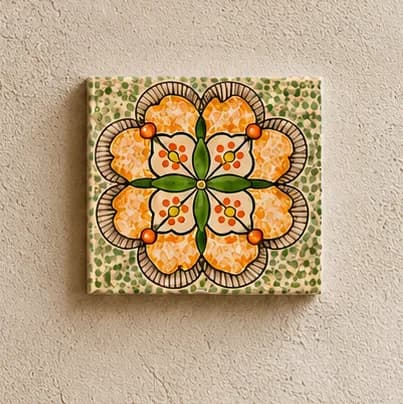
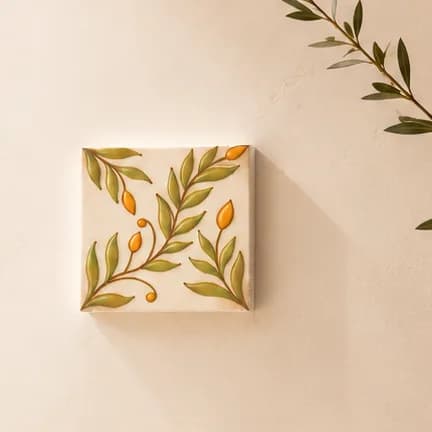
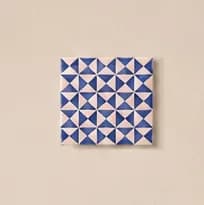
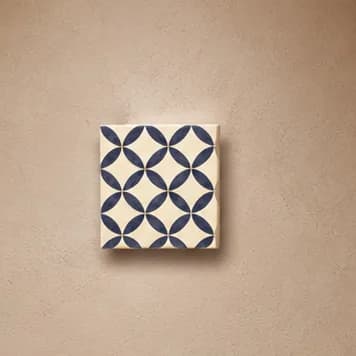
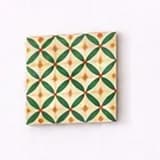
In the Lasaki range, Petalix, Trivon and Leafloop tiles are listed in green or blue. The Moroccan tile 4x4 inch and the Moroccan tile 5.5x5.5 inch with wooden frame have no colour in their listings, so look at their photos.
Grout colour is a design choice
Grout fills the joints between tiles, and its colour changes the look of a tiled surface more than most people expect.
| Grout | Effect | Works best with | Watch out for |
|---|---|---|---|
| Matching (close to the tile's background) | Joints fade; the surface reads as one piece | Busy patterns that should flow from tile to tile | It hides the grid completely |
| Contrasting (much lighter or darker) | Every tile and the grid stand out | Simple patterns, checkerboards, layouts where the grid is part of the design | With a dense pattern it can look busy |
| Neutral mid-tone (grey, beige) | Some definition without harsh lines | Mixed patterns and patchwork | Choose it beside the actual tiles, not from a photo |
Practical points:
- Light grout shows dirt. On a kitchen floor or behind the stove, white grout soon looks patchy. Darker grout hides wear and dirt better.
- Grout changes colour as it cures. It can take several days to reach its final shade, and freshly mixed grout looks different from cured grout. Ask your installer for a test on a spare tile or board, and look at it dry, in daylight and lamplight. Leave joint width to the installer too.
Reading tile sizes, and a quick count
Patterned tiles are often sold by their size in inches, and our product listings give the measurements in centimetres as well:
- 4x4 inch tiles are listed as about 10 × 10 × 1 cm: 10 × 10 cm is the face, and the 1 cm listed as height is, in effect, the tile's thickness.
- 5.5x5.5 inch tiles with a wooden frame are listed as about 14 × 14 × 2.5 cm. The listing does not say whether the 14 cm is the tile alone or includes the frame, so check the photos or ask us.
- 6x6 inch tiles in the range are listed as about 15 × 15 × 1 cm.
To estimate how many 10 × 10 cm tiles you need for a tabletop or a small panel:
- Measure the area in metres and multiply the length by the width. A coffee-table top 60 cm long and 40 cm wide is 0.6 × 0.4 = 0.24 square metres.
- Multiply by 100, since each tile covers about 0.01 square metres: about 24 tiles, laid six by four. If you work in square feet, 4x4 inch tiles come to 9 per square foot.
- Joints bring the number down slightly; cuts, breakages and spares for future repairs push it up. Buy all the tiles, spares included, at the same time, because a later batch may not match exactly.
Mixing tiles of different thickness on one surface? Tell whoever is fixing them, carpenter or installer, so the faces can be brought level.
Lasaki tiles in this guide
| Tile | Measurements (product data) | Colour (product data) |
|---|---|---|
| Moroccan tile 4x4 inch | about 10 × 10 × 1 cm | Not listed; see the photos |
| Petalix green tile 4x4 inch | about 10 × 10 × 1 cm | Green |
| Trivon blue tile 4x4 inch | about 10 × 10 × 1 cm | Blue |
| Leafloop blue tile 4x4 inch | about 10 × 10 × 1 cm | Blue |
| Leafloop green tile 4x4 inch | about 10 × 10 × 1 cm | Green |
| Moroccan tile 5.5x5.5 inch with wooden frame | about 14 × 14 × 2.5 cm | Not listed; see the photos |
| Petalix green tile 5.5x5.5 inch with wooden frame | about 14 × 14 × 2.5 cm | Green |
The range also lists Moroccan 4x4 inch tiles in mint, orange, blue and dark green, more colours of Trivon and Leafloop, and two 6x6 inch designs; ask us about these. The whole range is on the Handmade Tiles page.
Common mistakes and quick fixes
| Mistake | What happens | Fix |
|---|---|---|
| Pattern on every surface | The room feels crowded and the tiles lose their impact | One patterned surface; keep the rest plain |
| Fixing tiles straight from the box | Similar shades cluster in patches | Lay out dry first and mix tiles from several boxes |
| White grout on a kitchen floor | It turns grey and patchy | Go for a mid-tone or darker grout |
| A wall or décor tile on step treads | Feet can slip, especially when wet | Pattern on the risers; floor-rated, slip-resistant tiles on the treads |
| Treating a décor tile as suitable everywhere | Trouble in showers, on floors or on outdoor walls | Ask the supplier and the installer first |
A quick checklist
- One patterned surface per room, with the rest kept calm.
- A layout chosen and tried out dry on the floor.
- Tiles mixed from several boxes.
- One colour from the tile repeated elsewhere in the room.
- Grout colour tested on a spare tile and checked dry.
- Area measured, tiles counted, spares ordered at the same time.
- Suitability for wet areas, floors, steps and outdoor walls confirmed with the supplier and the installer.
For interior designers, architects, retailers and cafés
With measurements in centimetres on every listing, you can plan a panel or a tabletop before ordering. Interior designers, architects, tile retailers, cafés and hotels can request trade access to order from the Lasaki catalogue. For anything a listing does not answer, such as whether a tile suits a particular spot, ask us.
Frequently asked questions
What grout colour goes best with Moroccan-pattern tiles?
That depends on the effect you want. Grout close to the tile's background colour lets a busy pattern flow from one tile to the next. A contrasting grout outlines every tile, which suits simpler patterns and checkerboards. Grey or beige is the safe middle ground. In kitchens and on floors, avoid pure white, which shows dirt quickly, and try the colour on a spare tile before you decide.
Can I use patterned tiles in a shower or on a bathroom floor?
Only if that particular tile, and the adhesive and grout used with it, suit wet areas, and, on a floor, the tile is not slippery when wet. That depends on the tile's properties, so ask the supplier for its specifications and let a professional installer decide. Our product data does not record wet-area or floor suitability for Lasaki tiles, so ask us about the tile you have in mind.
How many 4x4 inch tiles do I need per square foot or square metre?
About 9 per square foot, because three 4-inch tiles fit along each 12-inch side. In metric, a 4x4 inch tile is listed as about 10 × 10 cm, so roughly 100 tiles cover a square metre. Both figures leave out the joints, which lower the count a little; cuts, breakages and spares for later repairs raise it. Whoever fixes the tiles can give you the final figure for your layout.
Will patterned tiles make a small flat look smaller or cluttered?
Not if you keep them to one surface, such as the kitchen backsplash, one bathroom wall or the step risers, and leave the walls and floors around it plain. In a small or dim room, choose a pattern on a pale background, and consider a panel framed by plain tiles instead of a full wall: it uses far fewer patterned tiles.
What sizes do Lasaki tiles come in?
Our product data lists three sizes in the Handmade Tiles range: 4x4 inch tiles of about 10 × 10 × 1 cm, 6x6 inch tiles of about 15 × 15 × 1 cm, and 5.5x5.5 inch tiles with a wooden frame of about 14 × 14 × 2.5 cm. Each listing gives its measurements in centimetres.
Can I put Moroccan tiles on stairs?
Yes, on the risers, the upright faces nobody walks on. Treads are a floor surface and need a tile your installer has confirmed is non-slip. Outdoor risers that get wet in the monsoon count as an outdoor wall, so have the installer check that tile as well.
Products in this guide
Stock Lasaki pots, vases and décor in your store
Retailers, nurseries, cafés and interior designers order from the full Lasaki catalogue with a trade account.
Share this guide
Share on WhatsApp

