White ceramic pots: styling ideas for homes, cafés, offices and shops
Five identical white pots in a row can look unfinished. How to mix heights and shapes, group pots in threes, choose leaves that stand out against white and use light and background, with setups for homes, cafés, offices and shops.
Lasaki Ceramics team12 min read
Product details checked 28 October 2026

In this guide
- Why white pots work almost everywhere
- Mix three heights: tall, middle and low
- Mix shapes, but keep one thing the same
- Group in odd numbers
- Choose leaves that stand out against white
- Light and background
- Setups for different spaces
- A word on drainage
- Common mistakes and quick fixes
- Quick checklist
- Choosing white pots in bulk for a café, office or shop
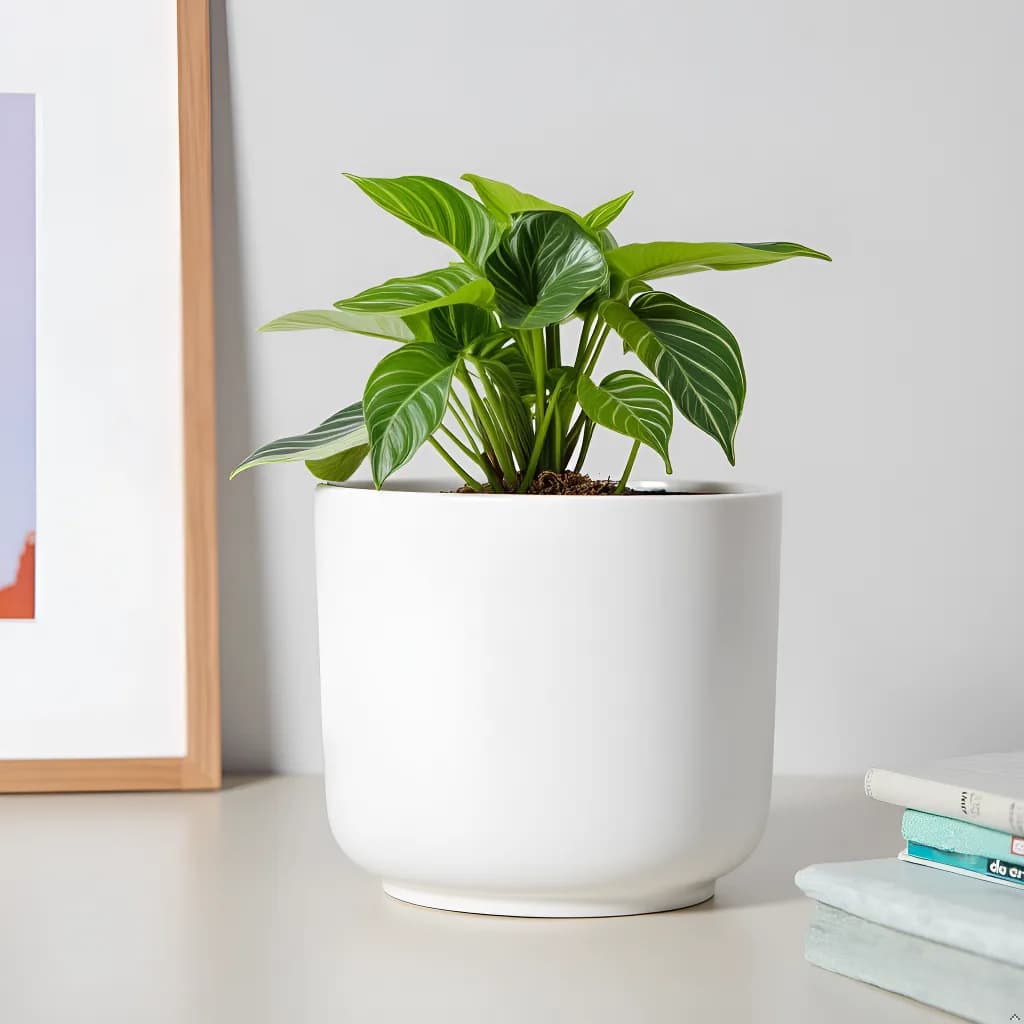
White is the safe choice for a plant pot, and that is also its catch. Line up five white pots of the same size in a straight row and they look as if they have just come out of the box. Arrange the same five with a little thought and the corner looks finished.
Here is how to get there, step by step, with setups for homes, cafés, offices and shops.
Why white pots work almost everywhere
- The plant comes first. A plain white pot does not compete with the leaves, so the plant's shape and colour are what you notice.
- It suits most interiors. White looks at home beside dark wooden furniture and brass, or in a minimal flat with grey floors, so it is a good default when you do not yet know where a pot will go.
- It is easy to add to. A plain white is usually easier to match later than a colour, especially if you stay with the same design. Before adding to an existing set, compare the product photos or ask us.
- In strong sun, it tends to stay cooler than a dark pot. US Department of Agriculture research on nursery containers found that white pots cut temperatures in the base layer of the pot by about 4 to 7 °C (8 to 12 °F) compared with the usual black ones. NC State Extension (North Carolina State University's gardening advice service) also notes that dark containers lose moisture faster. That helps on a west-facing balcony in May, though it will not make a shade-loving plant cope with full sun.

Mix three heights: tall, middle and low
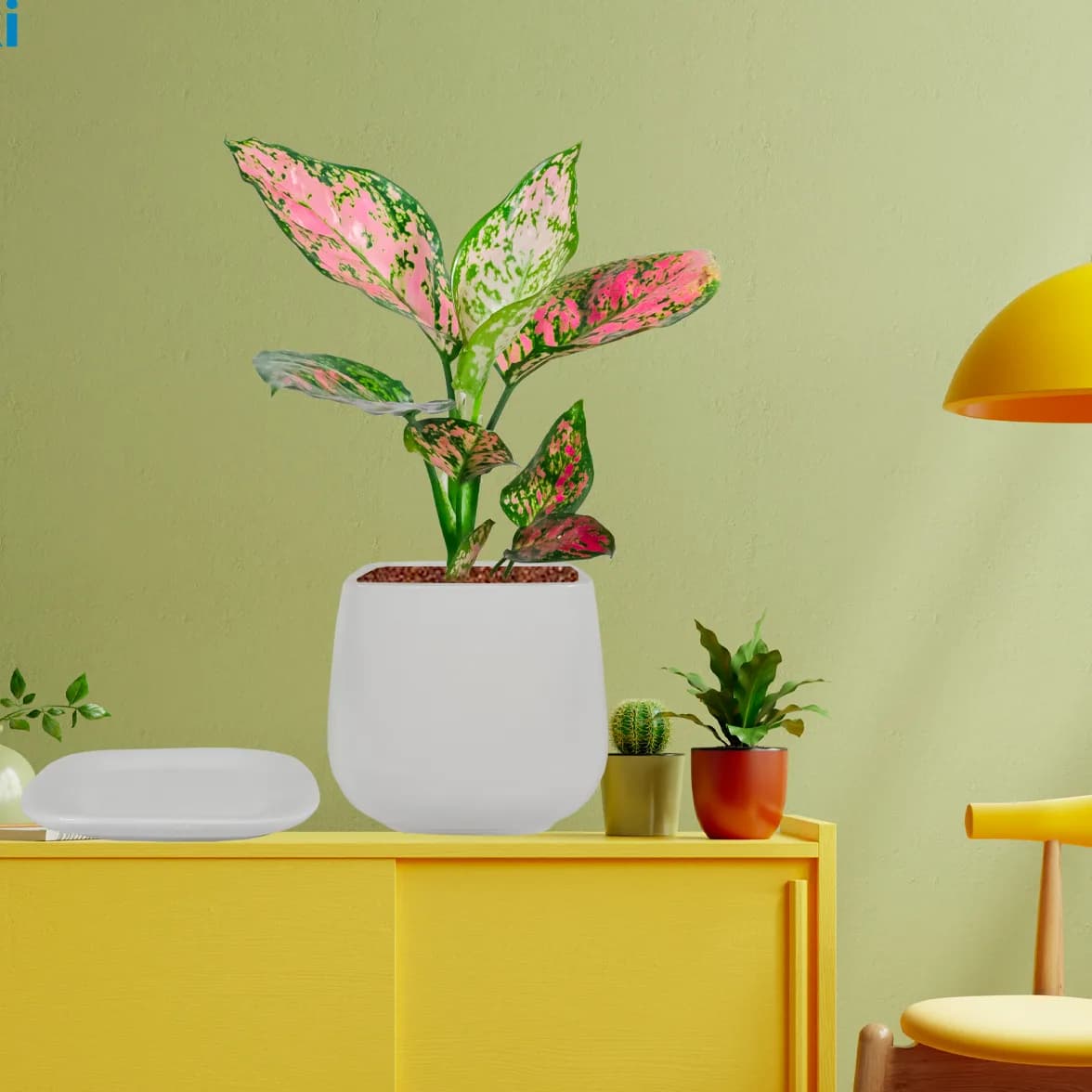
The quickest way to make a group look planned is to give it three levels: a tall piece that catches the eye, a middle piece that links the group, and a low, wide piece that anchors the front. Some white pots for each role (all sizes are approximate and taken from our product listings):
| Role | Example | Height | Width |
|---|---|---|---|
| Tall | Spanish pineapple big white | about 21.5 cm | about 18.5 cm |
| Tall and slim | Dristika 7.5 inch white | about 19 cm | about 13 cm |
| Middle | Kullad 5 inch white | about 12 cm | about 13 cm |
| Low and wide | Wick white | about 7.5 cm | about 15.5 cm |
| Low and very wide | Castor white | about 9.5 cm | about 24 cm |

- Count the plant, not just the pot. A snake plant in a middle-sized pot can easily be the tallest thing in the group.
- Tall at the back, low at the front. NC State Extension's container advice puts large plants behind and small ones in front, so nothing is hidden. On a table seen from all sides, put the tallest piece in the middle.
- Borrow height. A plant stand, a low stool or a stack of books can raise a pot. Lift one pot high and another a little, and three similar pots read as three levels.
Mix shapes, but keep one thing the same
Round, square and long pots sit happily together as long as one thing ties them together, and with white pots the colour already does that job. Change the colour, size and style all at once and the group starts to look like leftovers.
- One design in three sizes. Square menon white comes in three sizes: small, about 9 × 9 cm and 6 cm high; medium, about 12 × 12 cm and 7.5 cm high; and big, about 16 × 16 cm and 9.5 cm high. Set them in a loose triangle and they look deliberate.
- Round with long. A long pot suits a windowsill or a narrow counter. Tub big white is about 19 cm long, 13 cm wide and 11 cm high, and Jumbo white is long and narrow, about 18 cm long, 10 cm wide and 12 cm high. Pair one with a round pot of a different height.
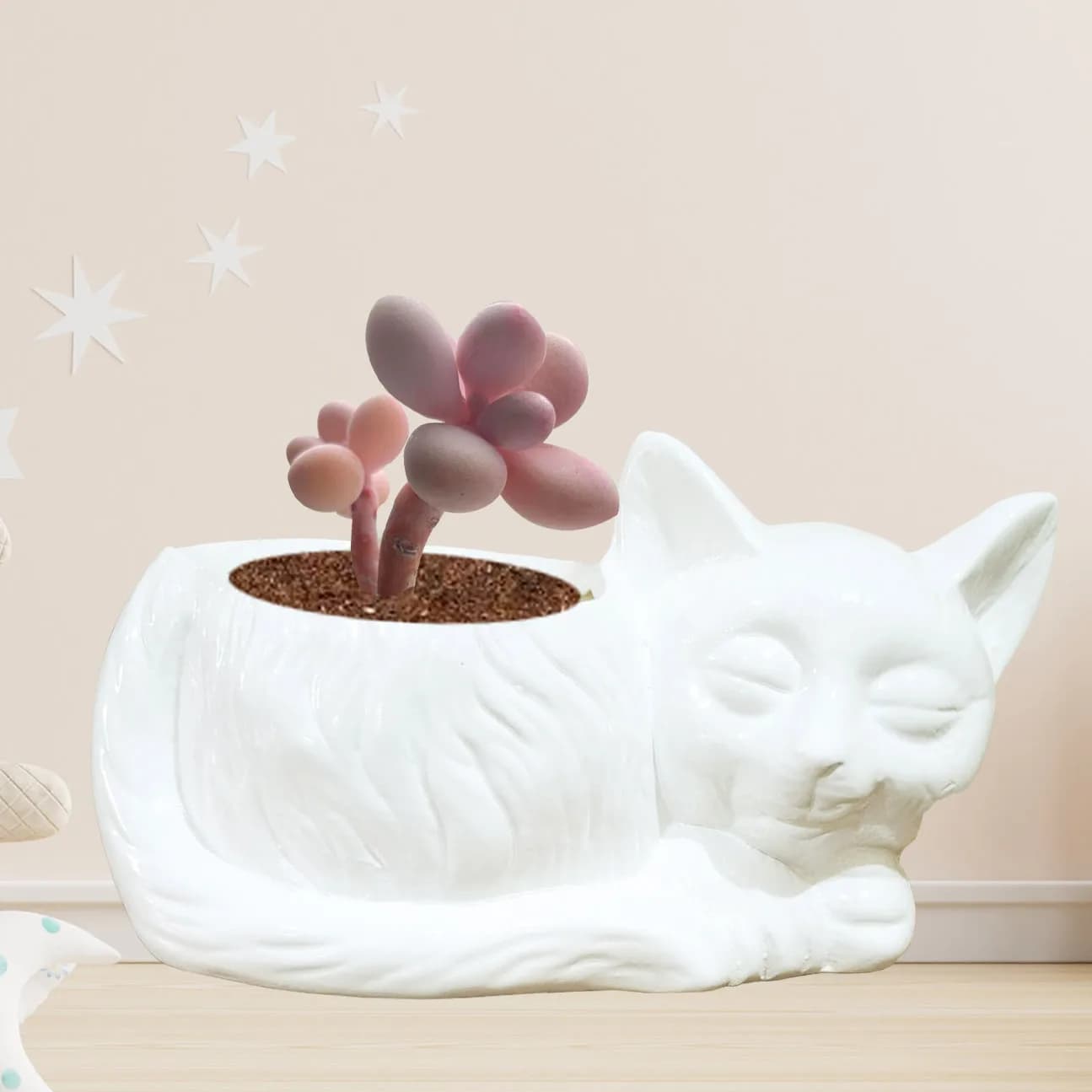
- One character piece. A figure design such as Cat white adds fun to a child's room or a café counter. One per group is plenty; three would fight for attention.

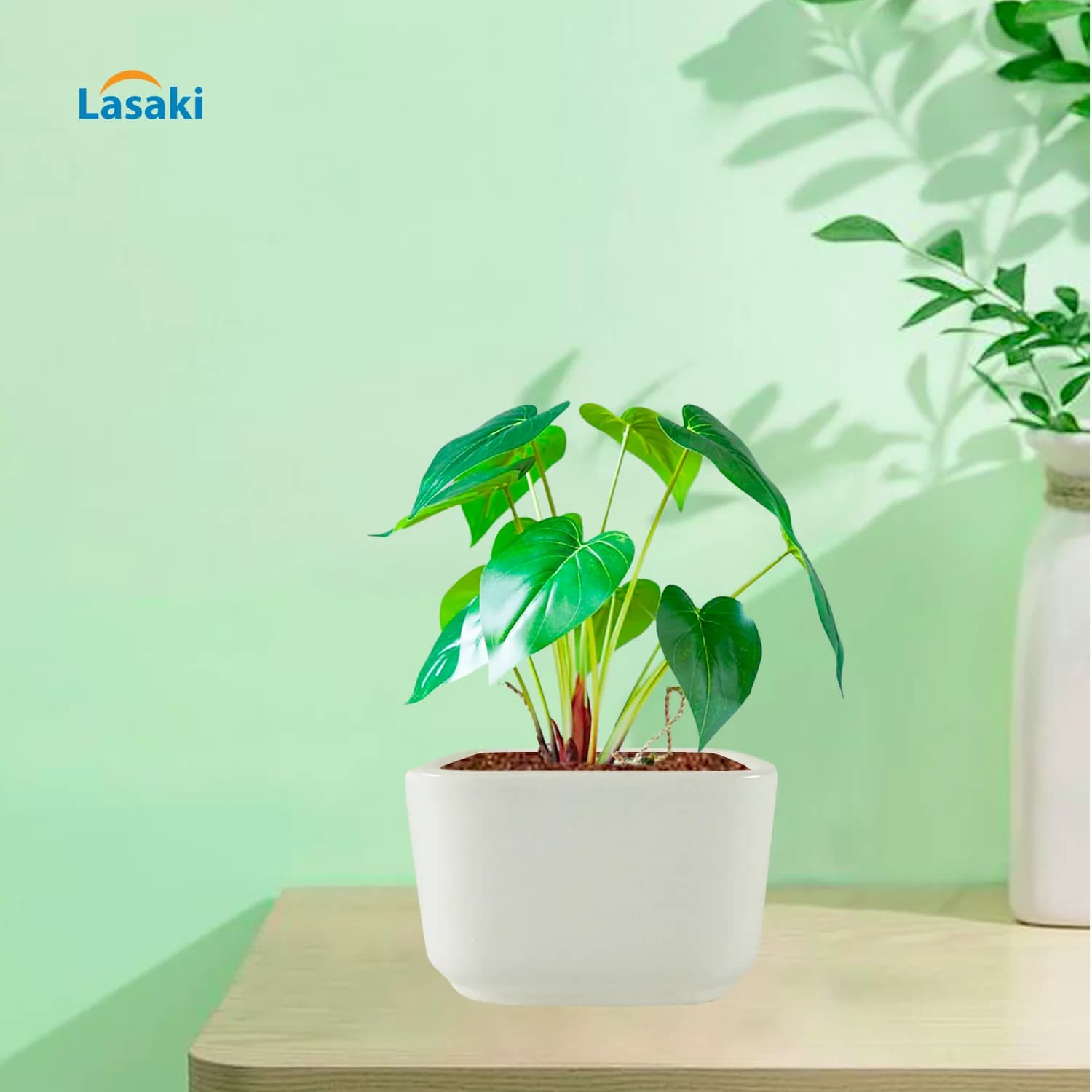

Pattern follows the same rule: a patterned pot such as Grevino dotted white (see the photos for the pattern) looks best among plain white ones, where it has room to show.
Group in odd numbers
Groups of three or five tend to look more natural than groups of two or four. NC State Extension's tip is to think in odd numbers: the pieces on either side balance the one in the middle. With an even number, the eye can start to split the group into pairs.
To build a group of three:
- Start with the tallest piece, counting the plant.
- Place the middle piece slightly in front of it, to one side.
- Put the lowest, widest piece on the other side, so the tops form a slope or a triangle.
- Keep them close. Pots that almost touch read as one group; pots a hand-span apart read as three separate things.
The catalogue also lists ready-made sets such as Avani set of 3 white HT. Its listing does not say what sizes are in the set, so check the photos or ask us.
Choose leaves that stand out against white
With a plain white pot, the leaves do the decorating, so aim for contrast:
- Mix leaf sizes and textures. The University of Illinois Extension advises against putting leaves of the same size and texture side by side: bold leaves seem closer and fine ones further away, so one of each makes both stand out. The UK's Royal Horticultural Society (RHS) adds that feathery foliage carries less visual weight, so you may need two fine-leaved plants to balance one bold one.
- Glossy against matt. The RHS describes smooth, glossy leaves as crisp and clean-cut, and velvety ones as soft and matt. A glossy dark leaf against white is about as sharp as it gets.
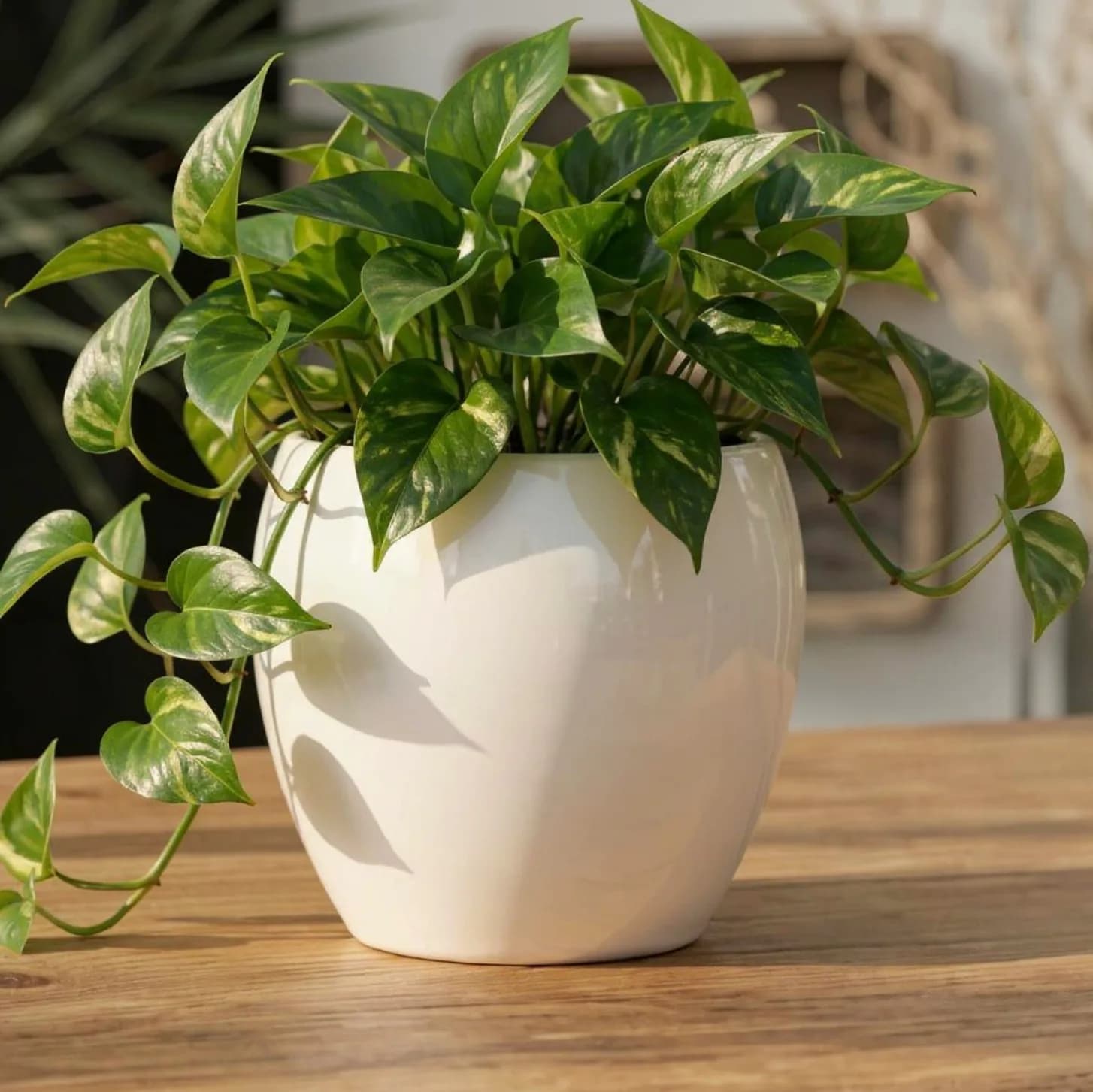
- Upright and trailing. Upright plants give height; a trailing plant softens the look of a tall pot as it spills over the rim.
Some plants common in Indian homes, with the light each one needs:
| Plant | Leaf look | Light (general guide) | Watering note |
|---|---|---|---|
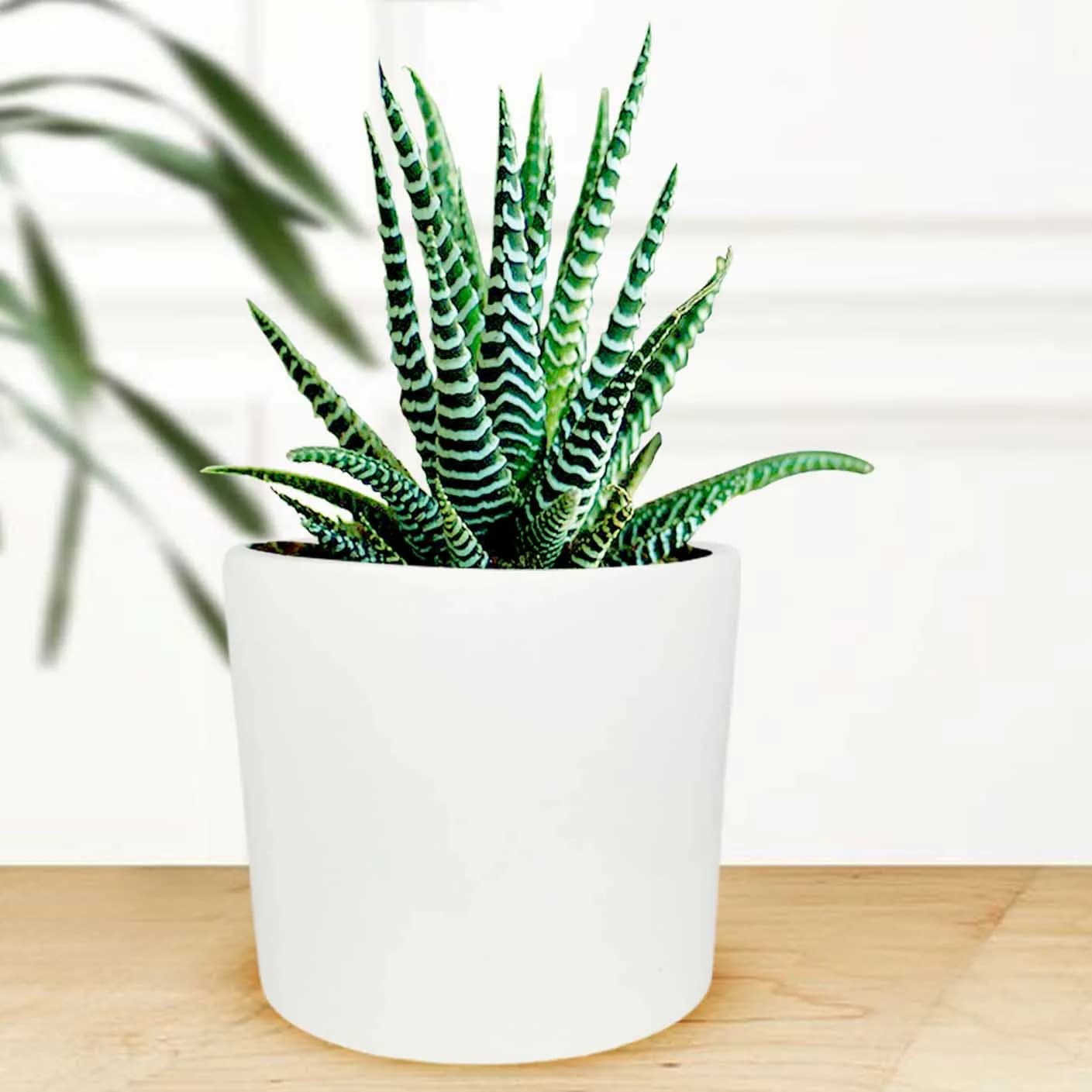
| Snake plant (sansevieria) | Stiff, upright, often banded | Bright light is best, even a few hours of direct sun (not harsh afternoon sun); tolerates very low light | Do not overwater; the roots can rot |
| ZZ plant | Glossy, dark green | Grows in very low light, does best in bright indirect light; direct sun can scorch it | Let it dry out between waterings |
| Money plant (pothos) | Heart-shaped, trailing, often variegated | Prefers bright indirect light, survives low light | Let the potting mix dry between waterings |
| Jade plant | Thick, rounded, fleshy | A sunny spot indoors with some afternoon shade | Water when the soil is dry, less in the cooler months |
| Tulsi (holy basil) | Soft, aromatic | Full sun, six hours or more: a balcony or terrace | Does poorly in waterlogged soil |
These are starting points, not rules. A dim flat in a Delhi winter and a bright Chennai balcony are very different places, so watch how your plant does in its spot.
Light and background
Start with the light, then style
No amount of styling makes up for the wrong light, so choose the plant for the spot, then the pot for the plant. The RHS flags three things to check:
- Midday sun can scorch leaves or make them droop. Bright light near a window, out of the harshest sun, suits most houseplants.
- Draughts: many houseplants dislike draughty spots. In Indian homes and offices that usually means the blast from an AC or a cooler, or a door that opens all day.
- Balcony wind: tall, narrow containers blow over easily, especially with tall plants in them. Keep those in a sheltered corner.
Give white something to stand against
A white pot against a white wall can vanish. That suits a calm, minimal corner, but most groups look better with some contrast behind them: a wooden shelf or plant stand, exposed brick or stone, an olive, terracotta or navy accent wall, or a jaali or cane screen that adds a play of light and shade.
Check the group under your own lights too. White can look creamy under warm yellow bulbs and slightly blue under cool tube lights, which matters most if you have mixed whites from different designs.
Setups for different spaces
Homes and flats
- Entrance: a matching pair beside the door, or one tall pot with a trailing money plant.
- Living room: one statement plant on the floor near a window, and a group of three on a side table.
- Windowsill or kitchen shelf: a row of identical small pots, such as Mini pot white, about 8 × 8 × 8 cm.
- Balcony: white pots in the sunniest spots, the widest and heaviest where the wind is strongest.
Cafés and restaurants
- Tables: keep pots low so guests can see each other. Pots around 10 cm high work well, such as Pearl small white with plate, about 10 × 10 cm and 9 cm high.
- Counter: one group of three next to the billing counter, where people wait.
- Housekeeping: put a plate or tray under every pot so water and soil are far less likely to reach a guest's table (see pots with plate and plates for planters), and wipe pots in the daily clean, because a soil splash shows on white.
- Room to grow: pick one or two designs that come in several sizes. Dristika white runs from 4 inch to 7.5 inch, about 10.5 to 19 cm high, so pots you add later are easier to fit into the set.

Offices and reception areas
- For desks away from windows, snake plant and ZZ plant are sensible choices, since both tolerate very low light, though they do better with more.
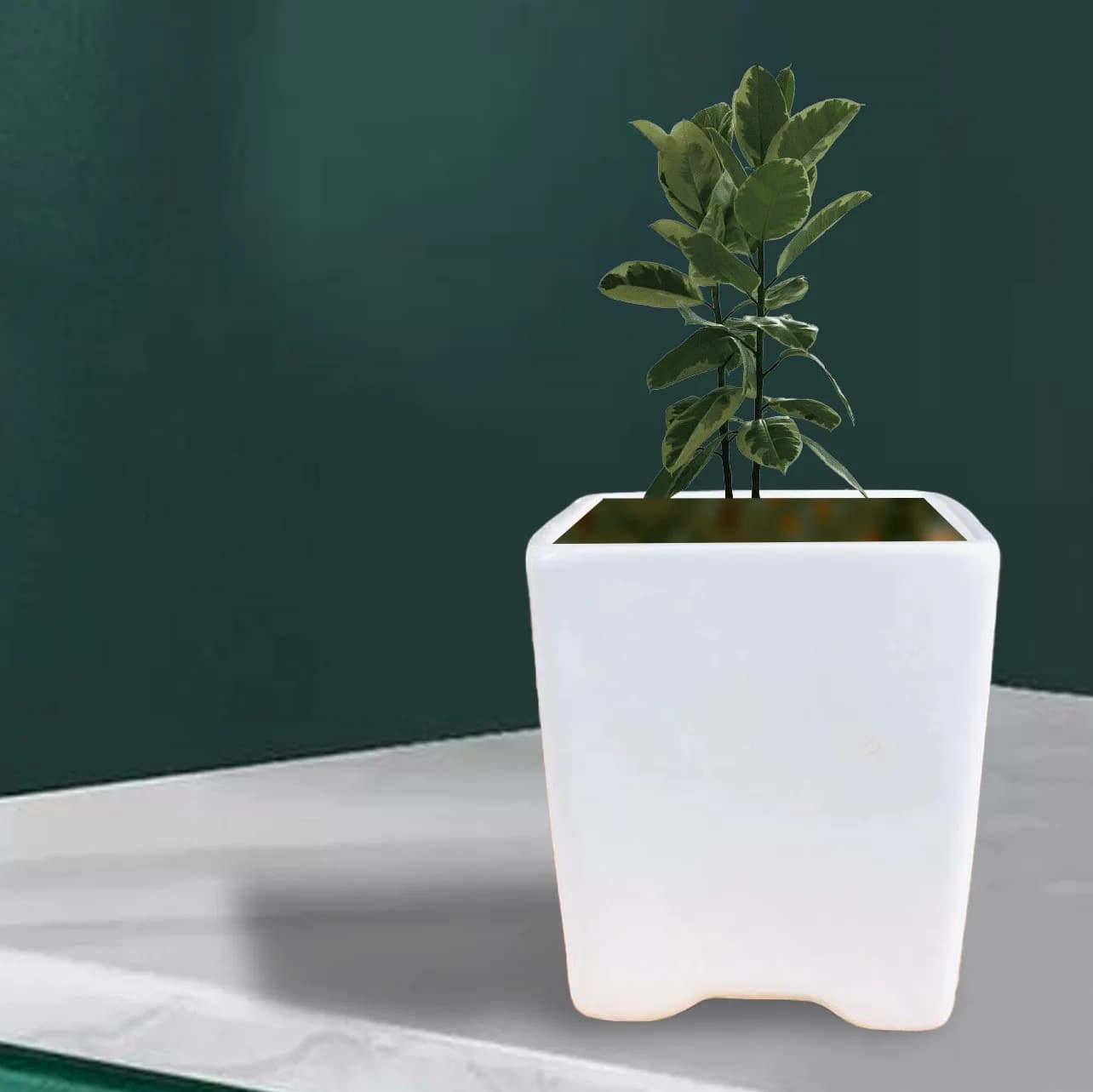
- The same white pot on every desk looks tidy; a long pot such as the Tub or Jumbo suits a reception counter.
- Agree who waters and when, or the plants end up being nobody's job.
Shops, nurseries and showrooms
- Let white be the backdrop, so the plant is the product.
- Show the size steps: one design in every size, beside a finished group of three that customers can picture at home.
- Label in centimetres. Names such as Small, Big or "5 inch" do not mean the same size across designs; centimetres do.
A word on drainage
Whatever you style, the water needs somewhere to go. American university gardening guides such as Penn State Extension, and the RHS, agree that a pot you plant straight into needs drainage holes. Our product listings do not say whether each pot has a drainage hole, so check the photos or ask us before planting directly into one.
A pot without a hole still works as a cover pot: keep the plant in a plastic nursery pot that has holes, stand it inside the white pot, and pour away any water that collects after watering.
Common mistakes and quick fixes
| Mistake | Fix |
|---|---|
| Every pot the same height, in a straight line | Use three levels, or lift one pot on a stand |
| Lots of small pots lost in a big space | Use fewer, larger pots; the RHS says fewer large containers often look better |
| White pot on a white wall, nothing stands out | Add a wooden shelf, a darker wall or darker leaves |
| Slightly different whites side by side | Compare photos; keep to one or two shades per group |
| Water left standing in a plate or cover pot | Empty it once the pot has finished draining |
Quick checklist
- The spot has the right light for the plant.
- Three levels, counting the plants, in an odd number or a deliberate pair.
- One shared thing (colour, design or shape), and leaves that contrast.
- Something behind the white, and a plate or cover pot that is emptied.
Choosing white pots in bulk for a café, office or shop
Start with a list: each spot, the light it gets and the pot size it needs. The full range is under white pots. Retailers, nurseries, cafés and interior designers can request trade access to order from the Lasaki catalogue, and for anything our listings do not answer, ask us.
Frequently asked questions
Do white pots show dirt more than coloured ones?
Yes, dust, water marks and soil splashes are easier to spot on white, especially on café tables or a busy counter. A wipe with a soft, damp cloth as part of the regular clean usually keeps them looking fresh. Our listings do not describe the finish of each pot, so if a mark will not come off, ask us about that pot before using a stronger cleaner.
Is a white pot better than a black one on a sunny balcony?
It usually helps. Dark surfaces absorb more of the sun's heat, and USDA studies of nursery containers measured the base layer of white pots several degrees cooler than that of black ones. Dark containers also tend to dry out faster. The pot colour only helps at the margins, though: choosing a plant that likes full sun, and feeling the soil before you water, matter much more.
How many pots should I group together?
Three or five is a good default, with different heights and the pots close enough to read as one group. A matching pair is the better choice when you want symmetry, for example on either side of a door. A row of identical small pots on a windowsill also works, because the repetition is clearly intentional.
Which plants look best in white pots?
Plants with a clear shape or strong leaf colour: a glossy, dark ZZ plant, an upright snake plant, a trailing money plant or a jade plant with its thick leaves. Variegated plants look striking against white but need good light to keep their markings. Pick the plant for the light in that spot first, then the pot. If you have a cat or a dog, note that all four are listed as harmful to pets if chewed; keep the first three away from small children too.
Do Lasaki white pots have drainage holes?
Our listings do not say this for each pot, so look at the base in the product photos or ask us about the one you have in mind. A pot without a hole can still serve as an outer pot around a nursery pot that drains; just tip out any extra water after watering.
We are fitting out a café. How should we choose white pots?
Plan it spot by spot: note the light and the plant you want in each place, then pick the pot. Low pots suit tables, plates help keep drips off guests' tables, and sticking to one or two designs made in a run of sizes makes later additions easy. Cafés, interior designers and retailers can request trade access, which lets approved businesses see prices and order from us.
Products in this guide


Stock Lasaki pots, vases and décor in your store
Retailers, nurseries, cafés and interior designers order from the full Lasaki catalogue with a trade account.
Share this guide
Share on WhatsApp